
Supporting Suzani Artisans: How Your Purchase Helps Preserve Uzbekistan’s Embroidery Heritage
Dec
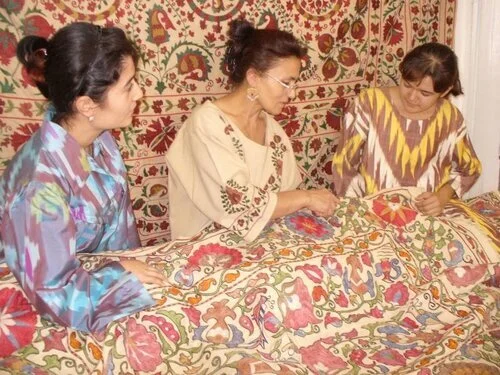
In the villages of Uzbekistan, suzani embroidery is more than an artistic tradition—it is the heart of cultural memory. For generations, women have gathered in courtyards, verandas, and sunlit rooms to stitch vibrant pomegranates, swirling vines, and protective sun motifs onto cotton or silk. Their hands carry knowledge inherited quietly from mothers, grandmothers, and great-grandmothers.
Today, when a handmade suzani travels from an Uzbek village into a home somewhere across the world, it carries with it the voices, history, and identity of these women. Supporting authentic suzani artisans is not simply an act of purchasing a textile—it is a gesture that helps keep a centuries-old heritage alive.
The Living Heart of Uzbek Suzani Embroidery
Suzani has deep roots in Uzbekistan’s major cultural regions—Bukhara, Samarkand, Shakhrisabz, Tashkent, and Nurata. Traditionally, suzanis were created for a bride’s dowry, symbolizing blessings for her new household. These textiles were believed to protect, guide, and bring prosperity. Over time, the craft evolved into one of Central Asia’s most recognizable art forms.
The motifs used in Uzbek suzanis are rich with meaning:
- Pomegranates represent abundance and family unity.
- Sun medallions symbolize protection and continuity.
- Vines and branches reflect the interconnectedness of generations.
- Flowers express joy, beauty, and spiritual renewal.
Artisans do not merely replicate these motifs—they reinterpret them through personal style and regional influences, making each suzani a unique expression of both tradition and individual creativity.

The Artisan’s Process: How a Suzani Comes to Life
Creating a suzani is a slow, intentional process that cannot be rushed or mechanized without losing its soul. It begins with drawing the design onto fabric—usually freehand. The artist decides the placement of flowers, the curves of vines, the scale of medallions. No stencil or template can replicate the originality of these drawings.
Once the design is complete, the fabric is divided into panels. This allows multiple artisans—often relatives or neighbors—to work on the same piece at once. Although each woman follows the same drawn pattern, her hand has its own natural rhythm. These subtle differences in stitch tension, color shading, or thread density give handmade suzanis their character.
Distinct regional stitches also define the craft:
- Basma (couching), known for its bold, raised texture, is prominent in Bukhara.
- Chain stitch, fluid and graceful, is typical of Samarkand and Nurata.
- Dense fill stitching creates dramatic contrasts in certain Shakhrisabz designs.
After weeks or months of embroidery, the panels are joined, washed, stretched, and finished. What emerges is not merely a textile—it is a story captured in thread.
Why Supporting Suzani Artisans Matters
Preserving a Fragile Cultural Heritage
Suzani embroidery is an intergenerational dialogue. When a finished piece finds a home abroad, it signals to artisans—especially younger women—that their tradition is valued. This encouragement is essential at a time when many crafts around the world face extinction due to modernization and shifting priorities.
Without recognition from buyers who appreciate handmade work, younger generations may leave the craft behind. But when suzanis are cherished globally, artisans remain motivated to continue drawing ancient symbols, practicing traditional stitches, and protecting regional distinctions.
Giving Value to Traditional Skills
Suzani embroidery requires patience, precision, and deep understanding of cultural symbolism. Supporting artisans affirms the value of these skills. It honors the time, effort, and mastery required to produce a single piece.
When people learn about and choose authentic suzani instead of factory-made replicas, they help maintain the integrity of the craft. They reinforce the idea that handmade work has meaning and deserves respect.
Strengthening Community Bonds
Embroidery circles remain central to village life. When artisans gather to stitch, they share stories, discuss family matters, and offer support to one another. These gatherings are spaces where wisdom is passed down naturally—from how to perfect a stitch to how to navigate life’s challenges.
Supporting suzani artisans helps sustain these community networks. As long as there is demand for handmade suzani, these stitching circles continue to flourish, fostering social connection and preserving communal heritage.
Protecting Regional Identities Within Uzbekistan
Each region of Uzbekistan has its own recognizable suzani style:
- Bukhara is famed for bold floral compositions and rich red hues.
- Samarkand is known for radiant sun medallions and vibrant contrasts.
- Nurata suzanis often feature delicate pastel palettes and elegant chain stitches.
- Shakhrisabz designs are distinguished by rhythmic vine patterns and expressive movement.
By supporting authentic artisans, buyers help protect these regional identities from being lost or homogenized. Machine-made imitations often blend styles together, erasing the distinctions that give Uzbek suzani its cultural depth.
Challenges Uzbek Suzani Artisans Face Today
Despite global appreciation, suzani makers face real obstacles:
- Machine-made fakes flood markets, often sold as “handmade” at low prices, making it harder for buyers to distinguish true craftsmanship.
- Traditional materials like silk thread and natural dyes are increasingly expensive and difficult to source.
- Market access is limited, especially in rural areas where artisans may lack online platforms or international connections.
- The pace of modern life can pull younger generations away from craft work that requires time and patience.
This makes the support of informed buyers more important than ever.
How Buyers Can Help Protect Uzbek Suzani Traditions
Choose Authentic Handmade Pieces
Handmade suzanis are characterized by small irregularities—slightly uneven stitches, subtle color variations, panel joins with visible differences. These qualities reveal the artisan’s hand.
Buy From Sellers Who Work Directly With Artisans
Transparent, ethical sellers help maintain quality and protect artisans from exploitation.
Learn and Share the Story
When people understand the meaning behind suzani motifs and craftsmanship, they help spread appreciation and awareness—both essential for cultural preservation.
Display and Use Suzani With Intent
Whether placed on a bed, hung on a wall, or used as décor, suzani should be treated as a living piece of heritage. Every display keeps the tradition visible and relevant.
A Tradition Carried Forward
Uzbek suzani embroidery continues today because people—both inside and outside Uzbekistan—recognize its beauty and cultural importance. Each piece carries thousands of tiny decisions made by skilled hands. Each motif echoes the past. Each purchase supports the continuity of a tradition that might otherwise fade.
By choosing authentic handmade suzani, buyers help artisans preserve an art form that tells the story of their culture, their families, and their identity. In doing so, they become part of that story themselves.