About Alesouk
A small textile house in Bukhara, Uzbekistan, since 2010: handwoven ikat, hand-embroidered suzani, and the cushions, clothes and rugs made from them.

Everything we sell is made by people we know by name, in workshops we visit, on looms we have watched being warped. This page is about those people and how we work, because on a website full of cloth it is the one thing you cannot see in a photograph.
I have spent sixteen years between two things that are not usually put together: traditional Uzbek craft and modern design. I founded Alesouk in 2010, and the idea has not changed since: to honour the past, we must innovate for the future, keeping the essence alive for generations to come.
In practice that means being where the work is made: in Margilan arguing about a colour, or in a Bukhara courtyard watching a suzani come off the frame. We have revived more than 125 traditional patterns, some from museum pieces and family cloths that had not been woven in a lifetime, and put them into palettes the Fergana Valley would never have chosen: pastels, greys, the colours a designer in New York or Copenhagen actually asks for. That argument, between what a pattern has always been and what a client wants it to become, is the whole job.
We work with more than 80 interior designers, fashion houses and small shops around the world, on ready-made cloth and on commissions. A commission usually starts with someone sending a photograph of a room.
Rustam Fayziev, founder, brand manager and creative director

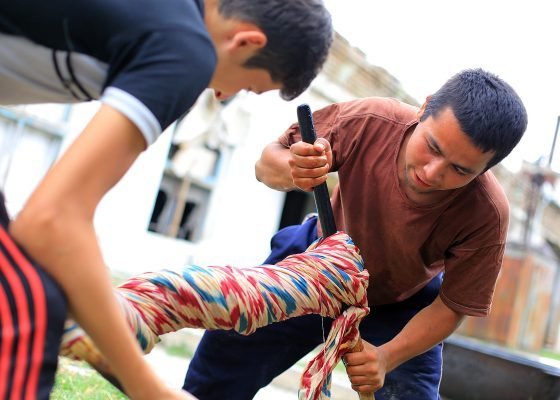
The pattern in an ikat is not printed. It is tied and dyed into the threads before a single line is woven: the warp is stretched on a frame, bound with cord wherever a colour must stay out, dipped, dried, unbound and bound again, one round for every colour; a rich cloth can take seven. Only then does it go on the loom, where the weaver keeps the pattern aligned by hand every few centimetres.
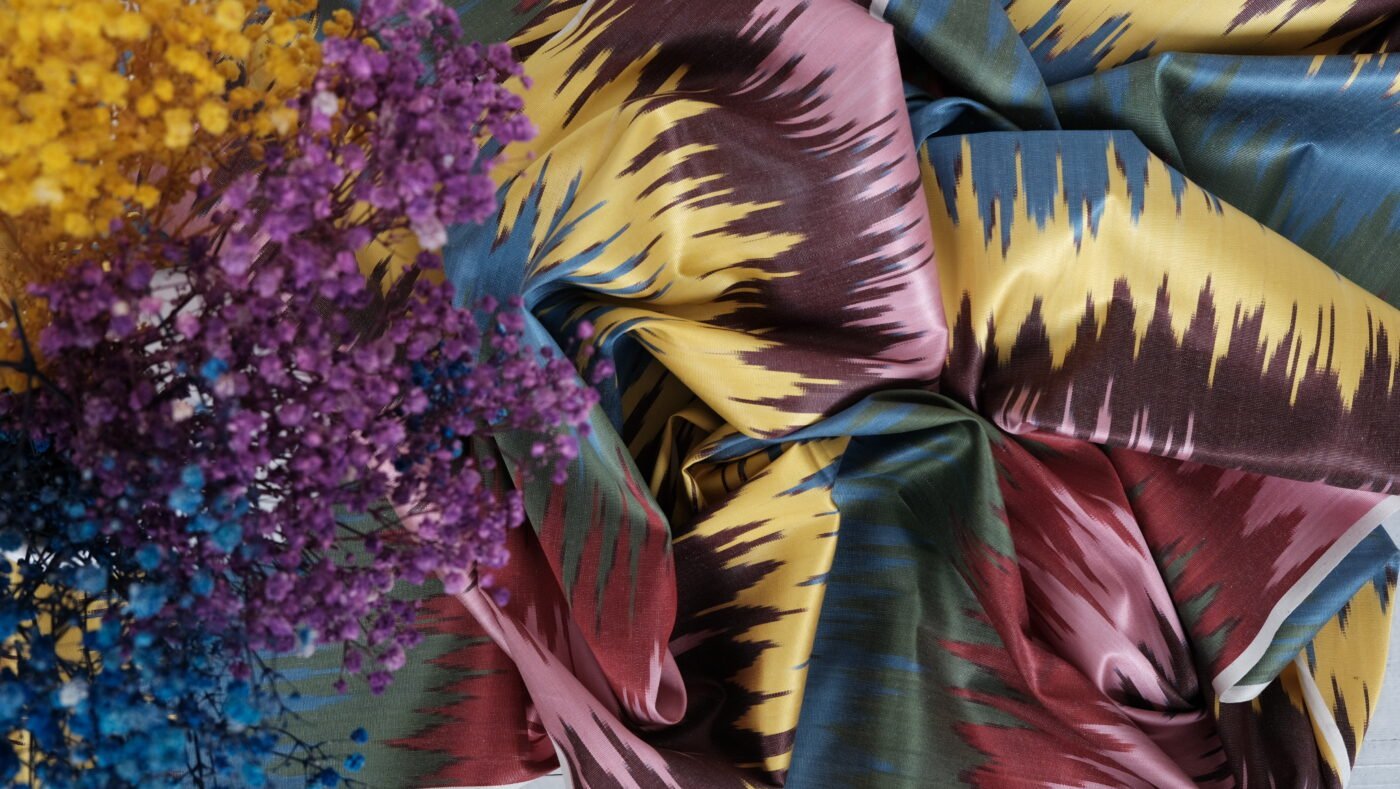
That is why the edge of every motif looks slightly clouded. The Uzbek name for the technique says so: abrbandi, binding the clouds. A printed imitation has crisp edges and a ghost of the pattern on the back; a handwoven ikat is as bright on the reverse as on the face.
Our ikat is woven in Margilan, in the Fergana Valley. Abdulla, who has woven for Alesouk for more than twelve years, draws the pattern onto the stretched warp himself; the binding, dyeing and weaving are done by his family and neighbours in the same yard. A handloom weaves cloth 40 to 65 centimetres wide, which is why ours is, and why a 140-centimetre “ikat” has come off a mill.
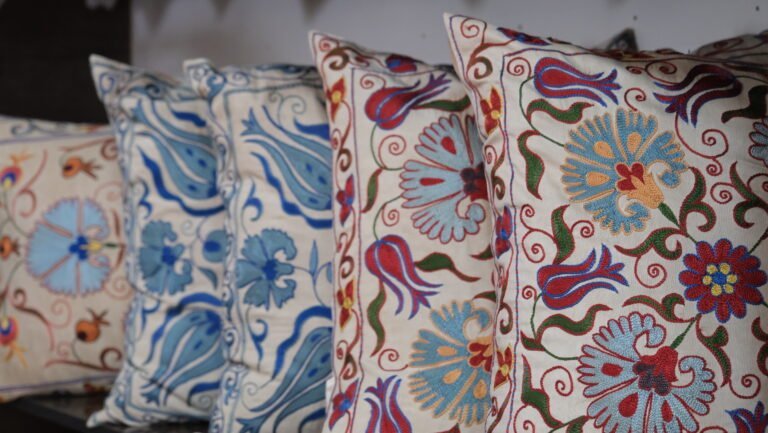
We are registered and based in Bukhara, and the address below is a real one: you can come and see the cloth.
Alesouk, 25A Qalqon Street, Bukhara 200100, Uzbekistan
Written by Rustam Fayziev, founder of Alesouk. Last reviewed October 2026.