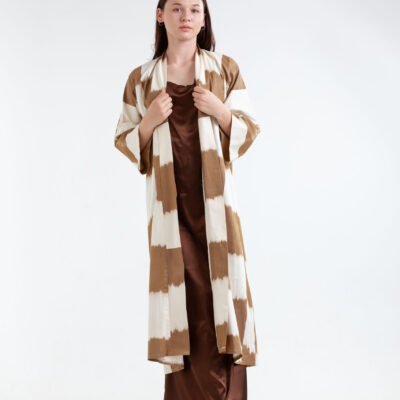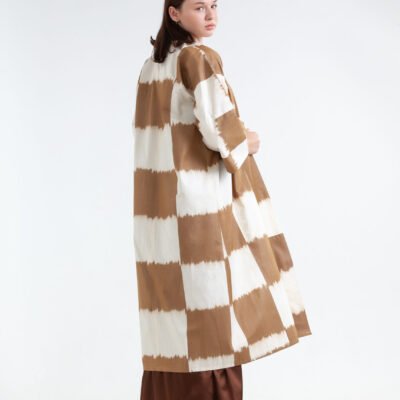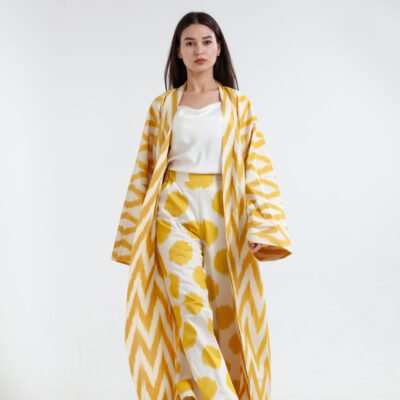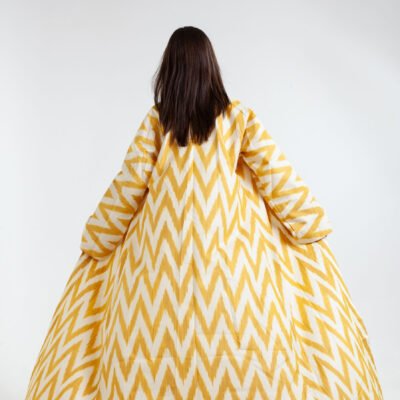

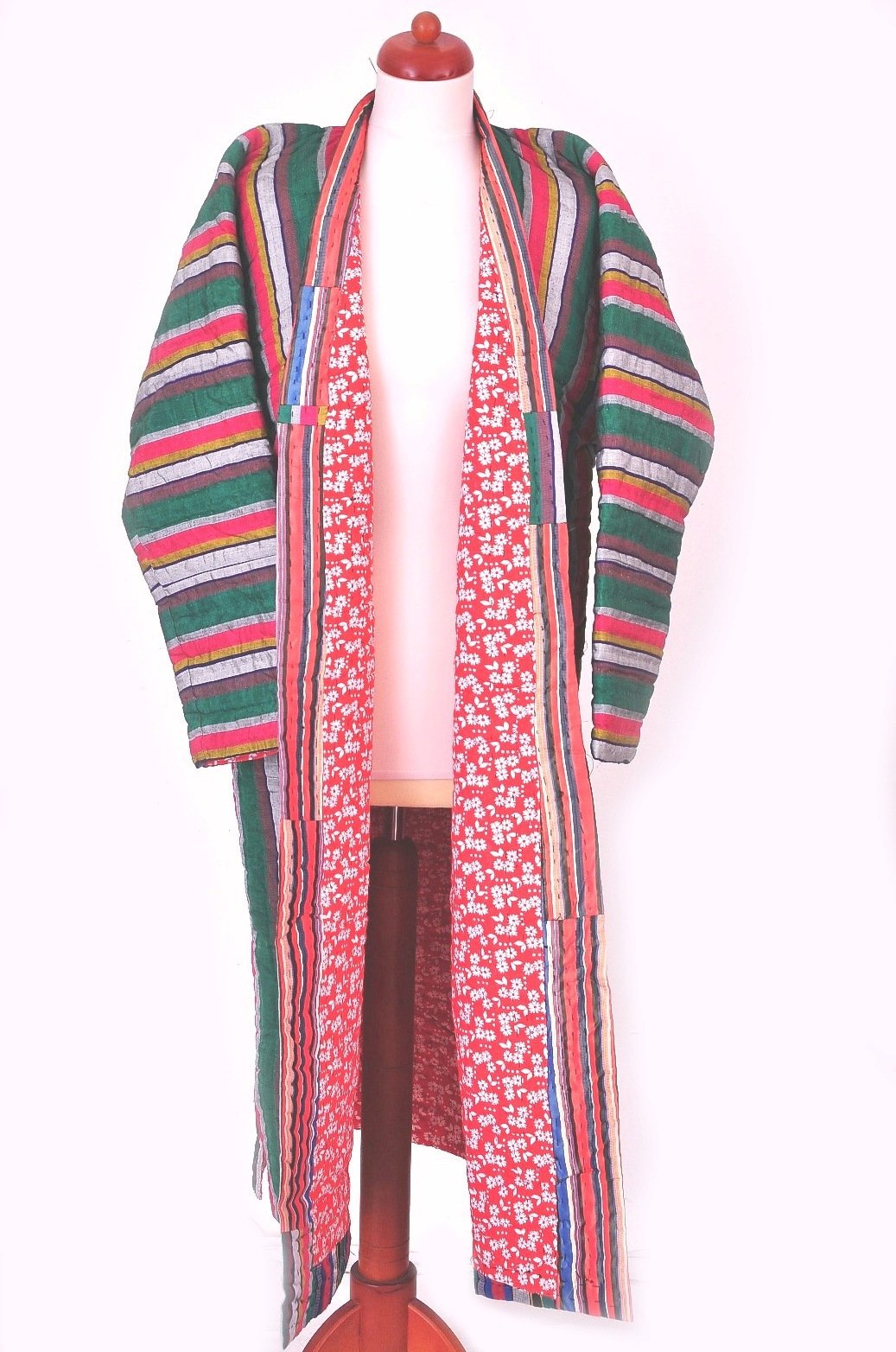
Red and Green Striped Ikat Chapan Coat
$85.00
Striped adras ikat chapan coat in red, green and cream · 60% silk on cotton · currently out of stock
Out of stock
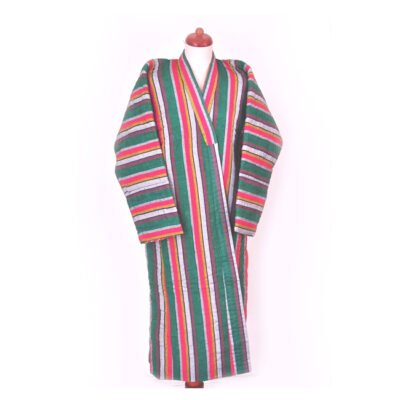
Broad red, green and cream stripes running the full length of the coat, each edge feathered where the warp was tied and dyed before weaving. This is the plainest and oldest form of the chapan — bands of colour rather than figures — and the banded trim at the opening, hem and cuffs is the traditional finish.
Product details
- Garment: a chapan coat — full length, worn open
- Cloth: handwoven adras, 60% silk and 40% cotton
- Size: one size, cut generously and worn open — custom lengths and sleeve lengths on request
- Main colours: red, green, cream
- Motif: broad vertical stripes with feathered ikat edges
- Banded edging at the front opening, hem and cuffs
- Care: dry-clean, or hand wash cool and dry flat in the shade.
- Cloth handwoven in Margilan; garment cut and sewn in Tashkent
How to wear it
The striped chapan is the oldest and plainest form of the garment — no medallions, no scatter of motifs, just broad bands of colour down the length of the coat. It is the version in nineteenth-century photographs and the one that still looks least like fancy dress. Worn open, by women and men alike. The two chapans that are in stock sit with the rest of the robes and chapans.
How this ikat is made
The pattern is not printed on the cloth and it is not embroidered into it. Every thread of the warp is tied off in bundles and dyed, one colour at a time, before a single row is woven — a process called abrbandi, cloud-binding, for the soft feathered edge it leaves on every motif. The cloth is handwoven in Margilan in the Fergana Valley. The garment is then cut and sewn in our atelier in Tashkent.
Availability
This piece is out of stock. The cloth is handwoven in small runs, so it is not always on the shelf — but the design can be made again. Tell us through the contact page and we will say what is possible and how long it would take.
| Weight | 1 kg |
|---|
Related products