Ikat Upholstery Fabric
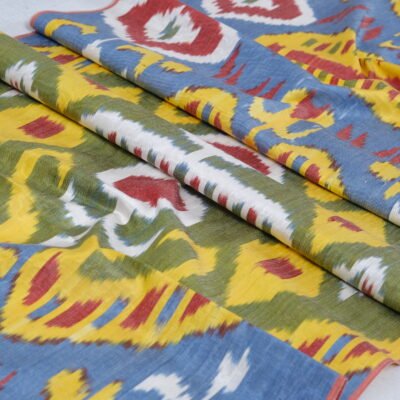
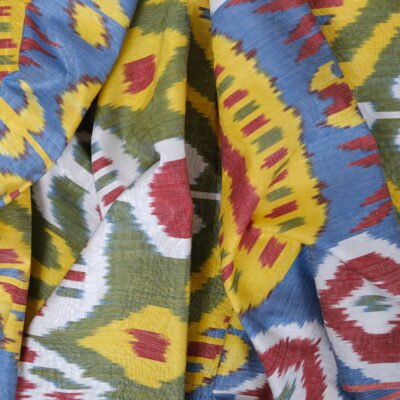
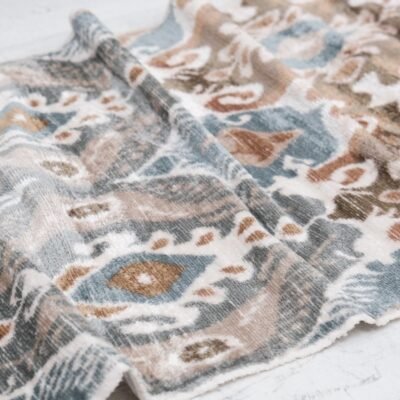
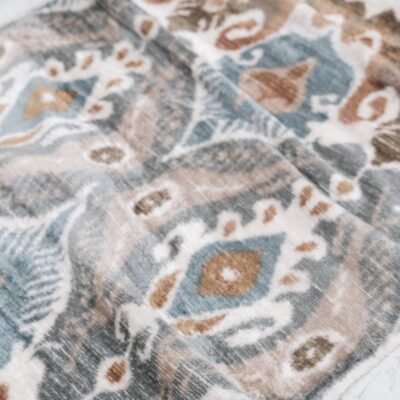
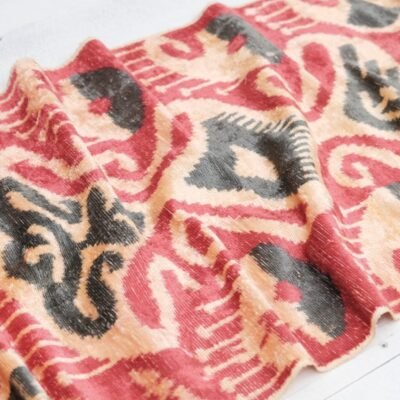
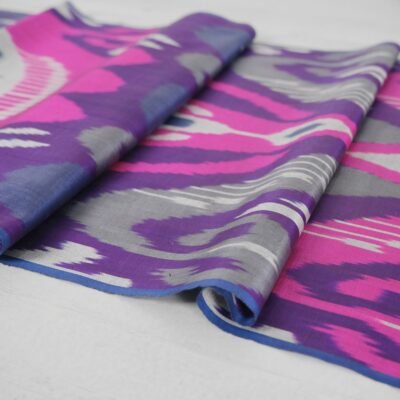
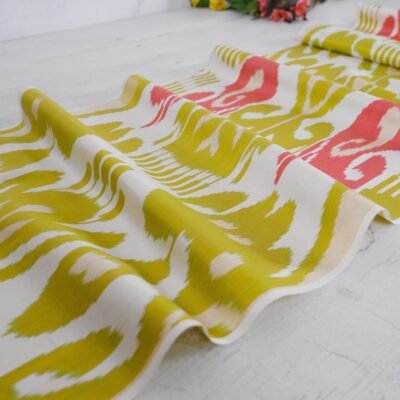
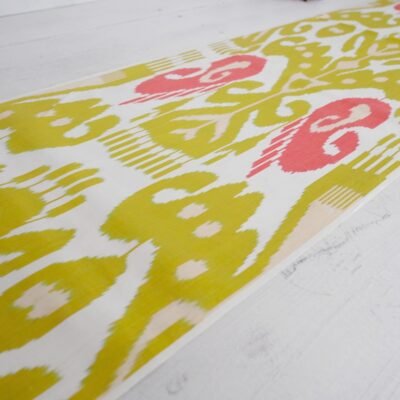
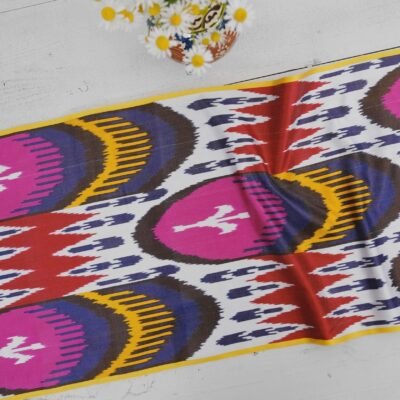
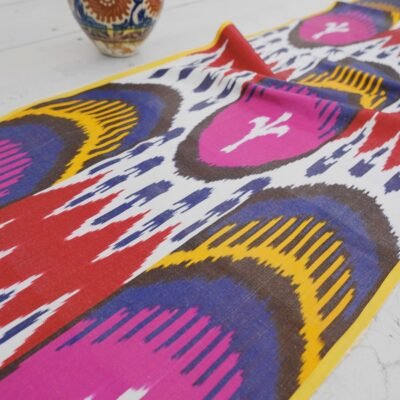
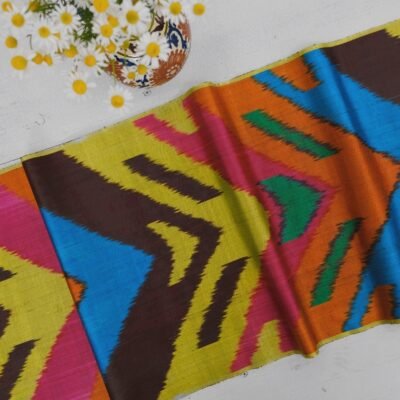
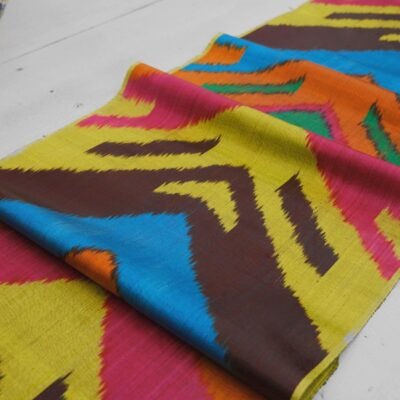
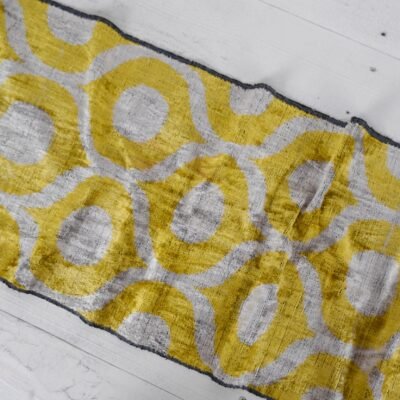
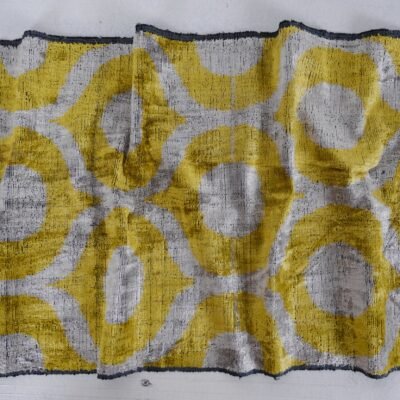
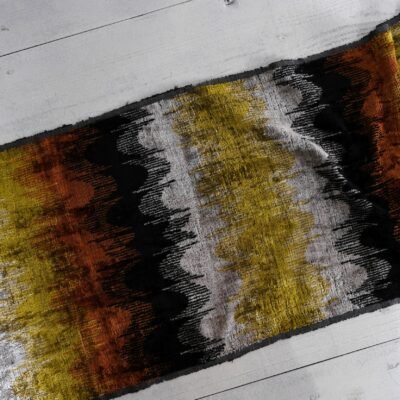
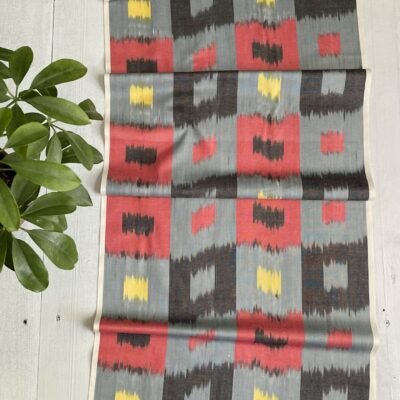
These are the handwoven Uzbek ikats our upholsterers come back for: silk velvet (bakhmal) at $39–48 a metre, silk-cotton adras at $14.50–17, and cotton. Many of our customers are upholsterers, and over the years they have chosen these cloths for headboards, occasional chairs, ottomans and stools. The section is built from what they buy, and the notes below are honest about where each cloth wears well and where it does not.
Widths are 40–50 cm (16–20 in), much narrower than mill upholstery fabric, so check the width notes before you order. One unit is one metre (1.09 yards), cut to order. Samples of up to three designs are free; you pay only the postage. Orders leave Bukhara within 24 hours by tracked airmail: USA 9–18 working days, Europe 8–16, elsewhere 10–20.
Easy Ways To Get In Touch
Reach out to our team using the contact form or direct via WhatsApp and we'll get back to you as soon as possible.
Whether you have a question about custom inquiries, wholesale support or would like to work together, we'll do our best to help you.
WhatsApp
Contact us via Email
We strive to answer all email requests within 24 hours, but we are usually much faster than that.
Join Our Newsletter
Subscribe to the Alesouk mailing list to receive updates on new arrivals, special offers and other discount information.
*By completing this form you're signing up to receive our emails and can unsubscribe at any time.
The cloths in this section
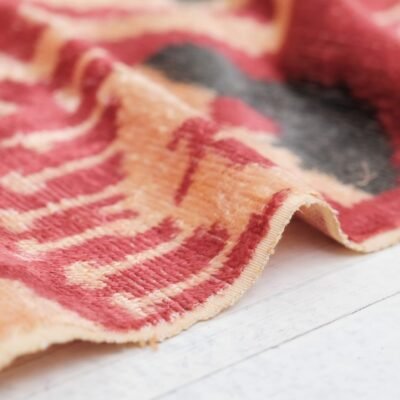
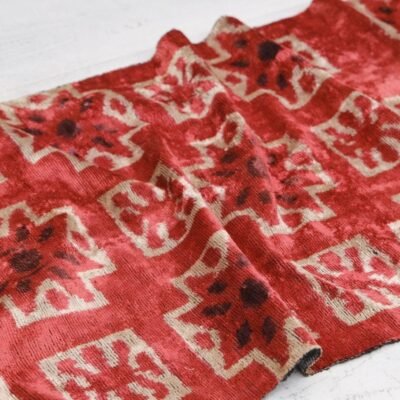
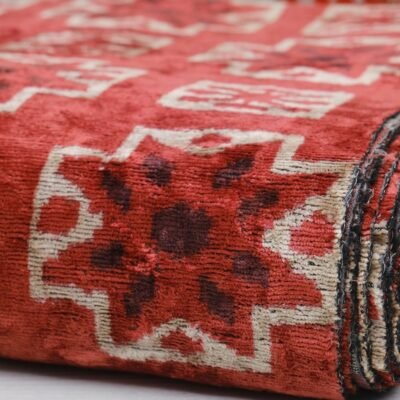
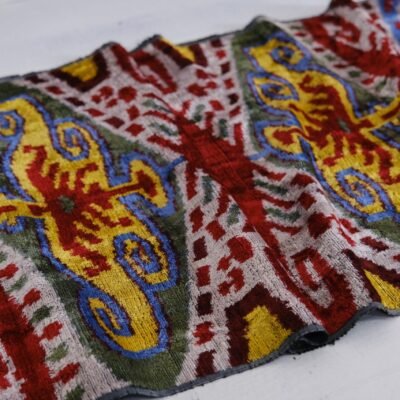
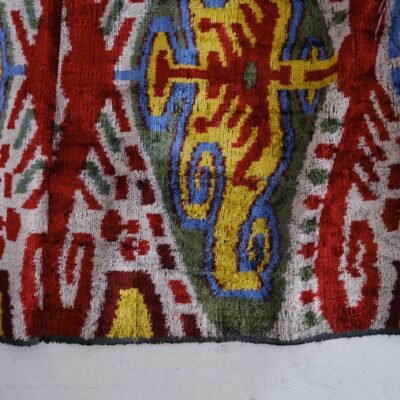
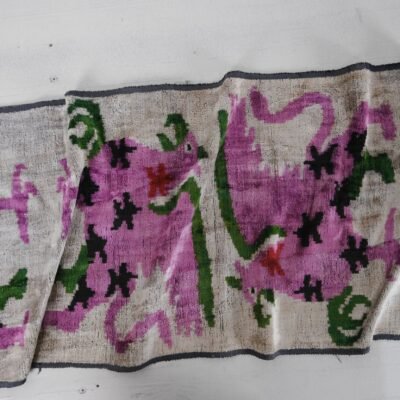
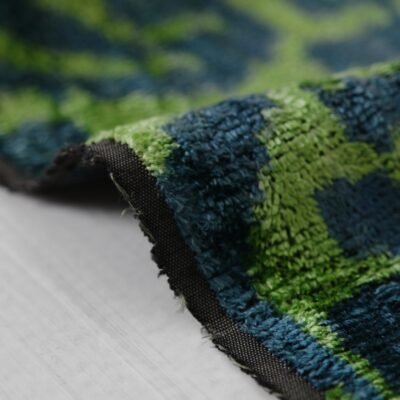
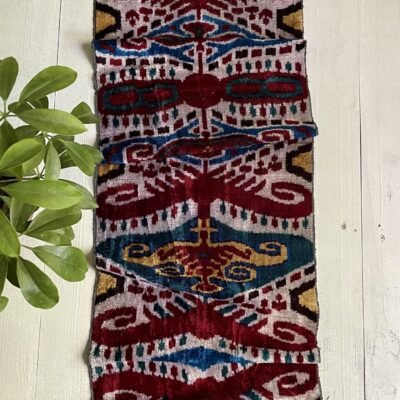
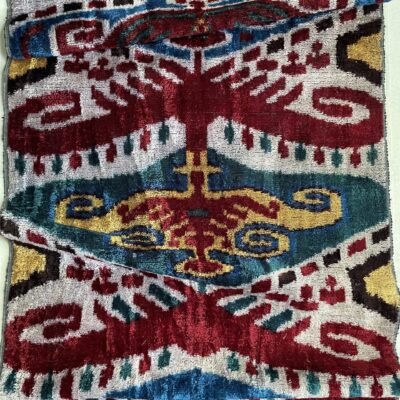
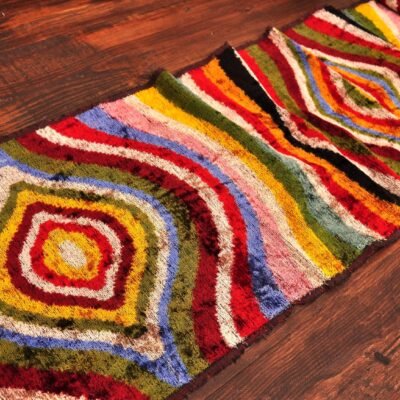
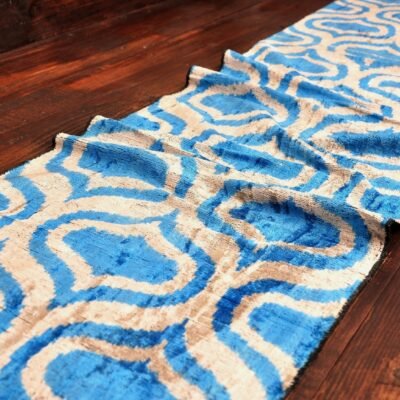
Silk velvet ikat (bakhmal) is most of the section. A silk warp is tie-dyed before weaving, then raised over rods and cut by hand into a pile, 40 cm wide. Most of these velvets have the pile on a cotton ground, which gives the cloth body. A few have an all-silk ground: lighter, and better kept for a headboard or a chair back than a seat.
Velvet is what upholsterers choose for:
- occasional and slipper chairs
- headboards and footstools
- the inside back of an armchair
- bolsters
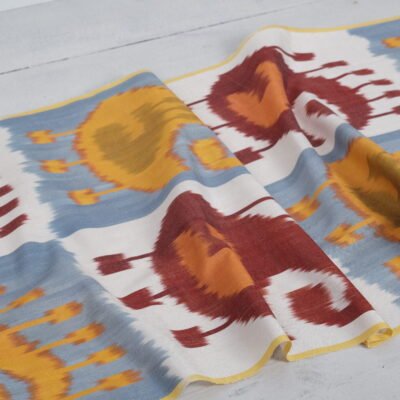
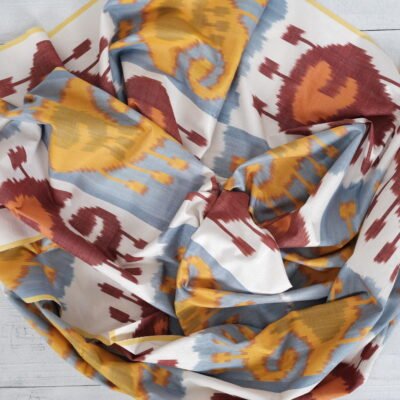
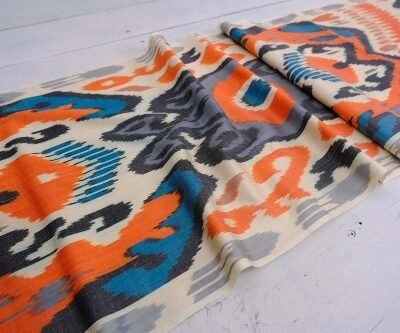
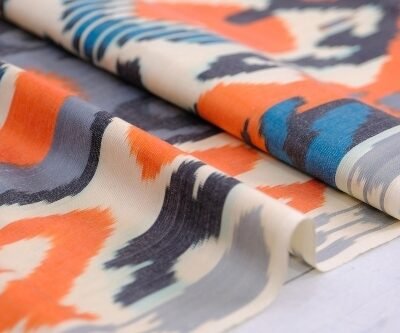
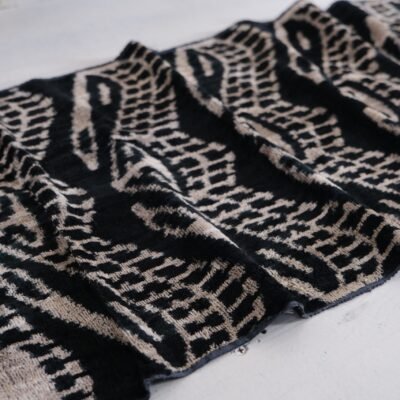
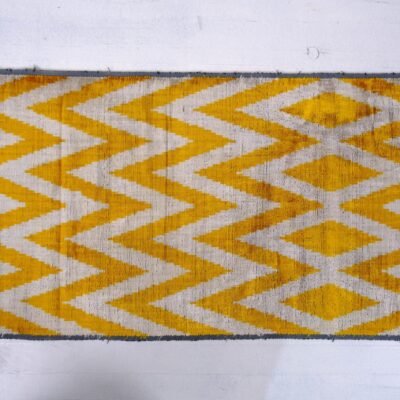
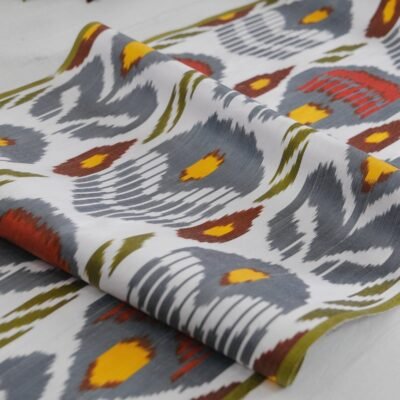
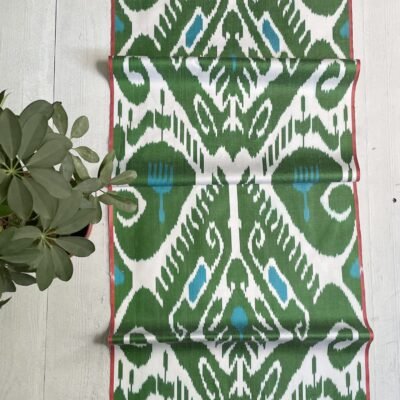
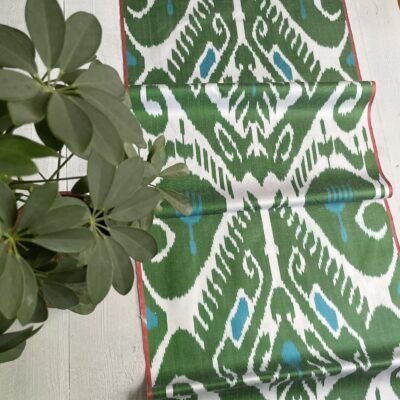
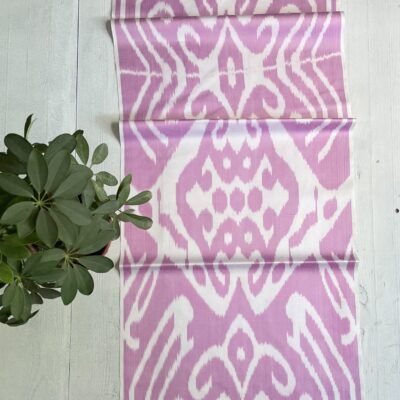
Silk-cotton adras and shoyi (50–70% silk, 40–50 cm) are the lighter cloths here. The silk carries the colour and the sheen, and the cotton gives the cloth its body. Our upholsterer customers have used them for years on:
- headboards and upholstered panels
- stools, ottoman tops and chair backs
- dining chairs that see occasional use
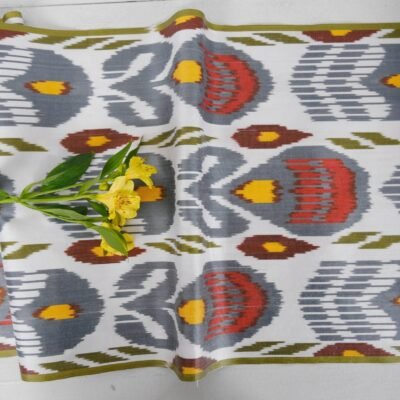
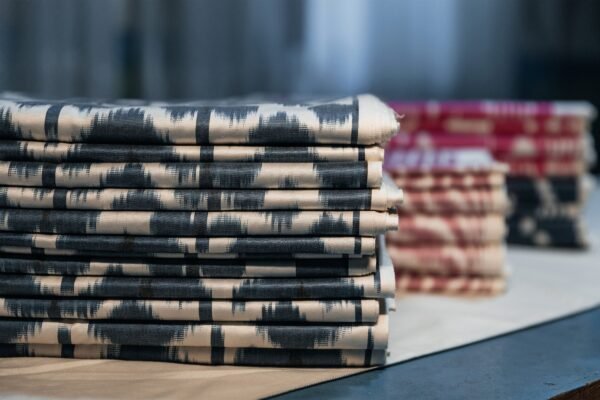
Cotton ikat is the plainest and most forgiving cloth. It is firm, it takes staples and piping, and it washes at 30 °C before it goes on the frame. More cottons, including 65 cm cloths for larger seats, are under Cotton Ikats and Wide Ikats 65 cm.
How silk ikat and velvet wear on furniture
Handwoven ikat is a decorative furnishing cloth, not a contract fabric. It is not sold with a Martindale or Wyzenbeek rub count. We have not had it tested, so we do not quote one.
What we can describe is how it behaves:
- Where silk is sat on every day, it polishes and softens.
- Velvet pile flattens where it is pressed.
- The colours mellow slowly in strong light.
That is the look of an old Bukhara chapan, and some clients want exactly that. If you want the cloth to stay as it is in the photograph, use it where it is looked at more than sat on: headboards, chair backs, occasional chairs.
For any seat in daily use:
- Ask your upholsterer to back the cloth with a light fusible or latex backing. Backing stops the weave shifting and the seams slipping.
- Choose cotton or a cotton-ground velvet over the lighter silks.
For a sofa, the back cushions, arms and scatter cushions are the safe places. For the seat cushions, tell us the piece and we will suggest designs.
Width: what fits in one piece
Mill upholstery fabric is usually 137–140 cm (54 in) wide. A Margilan handloom weaves 40–50 cm (16–20 in). Allowing for the turn-under, that means:
- 40 cm covers a stool top or seat pad up to about 30 cm across, a bolster, or a cushion up to about 35 cm square — each in one piece.
- 50 cm covers a drop-in seat or stool top up to about 40 cm square, a chair back of the same width, or a cushion up to 45 cm.
- Larger seats need a seam. If you want a seat up to about 55 cm square in one piece, choose a 65 cm cotton.
Anything larger is pieced from strips, as Uzbek robes and hangings have always been. That includes headboards, sofa backs, large ottomans and curtains.
Joining narrow loom widths
- Layout: put one full width in the centre and join narrower strips either side. The seams then fall symmetrically, not down the middle of a headboard or chair back.
- Seams: join selvedge to selvedge with a plain seam pressed open. On velvet, run the pile in the same direction on every strip. If you don't, the panels read as two different colours.
- Pattern match: match the pattern at the repeat. The faint line across the cloth at each repeat is a useful guide. Expect a close match rather than a perfect one: the motifs are tie-dyed into the warp by hand and drift a little along the length, which is part of the cloth.
- Seats: put joins under the piping or along the edge, where they take no wear.
- Extra cloth: allow one extra pattern repeat for each join.
- One order: buy every metre for one piece of furniture in one order. Each dyelot is a single warp, and a re-weave will not match exactly.
How many metres you need
A quick rule: take the metres your upholsterer quotes for a standard 137 cm fabric, multiply by about 2.7 for 50 cm cloth or 3.4 for 40 cm, and add the repeats for the joins. Typical amounts:
| Piece | 50 cm cloth | 40 cm cloth |
|---|
| Stool top or seat pad, up to 30 cm | 0.4 m | 0.4 m |
| Drop-in seat, up to 40 cm square | 0.5 m per chair | too narrow — choose 50 cm |
| Two 45 cm cushion fronts | 1 m | too narrow — choose 50 cm |
| Double headboard, 150 × 70 cm | about 4–5 m | about 5–6 m |
| Armchair (5–6 m of 137 cm fabric) | about 14–16 m | about 20 m |
| Pair of lined curtains, each 130 × 220 cm | about 15 m | about 20 m |
Large patterns need more than these figures, because the repeat on the classical designs runs up to about 225 cm. Send us the measurements or your upholsterer's cutting list, and we will confirm the metres before you pay.
Ikat curtain fabric
Silk-cotton adras makes a lustrous curtain that catches the light, and cotton hangs straight and washes; both take a lining. Velvet makes a heavy, warm curtain for a door or a draughty window.
For a full window the 40–50 cm widths mean several seams. The 65 cm cottons, woven wide for curtain makers, need fewer: two strips seamed at the repeat make a 130 cm curtain.
For lining, pattern placement and making up, see our ikat curtain guide.
Samples before you commit
Order samples before you buy metres for furniture. A 20–25 cm piece shows the weight, the hand, the true colour and, on velvet, the way the pile catches the light — none of which a photograph shows properly. It also lets your upholsterer see how the cloth pulls over a frame.
Care
Silk velvet:
- Dry-clean only.
- Steam from the reverse to lift crushed pile.
- Never iron the face.
Silk-cotton adras:
- Dry-cleaning is recommended.
- Once upholstered, vacuum with a brush head and treat spills at once with a dry cloth.
Cotton:
- Pre-wash at 30 °C before it goes on the frame.
- Spot-clean with cold water afterwards.
More in how to wash ikat fabric.
If you are new to ikat, start at Ikat Fabrics. Our handwoven versus printed ikat guide shows how to tell the real cloth from a print. For more cloths of each kind, see Silk Velvet Ikats, Silk Ikats and Wide Ikats 50 cm.
Frequently asked questions
Is ikat fabric good for upholstery?
Yes, for the right piece. Silk velvet and silk-cotton adras ikat are what upholsterers have chosen from us for years, for headboards, occasional chairs, stools and chair backs. For seats in daily use, choose cotton or a cotton-ground velvet and have it backed.
Can I use silk ikat for upholstery?
Yes, where it is not sat on hard every day. Silk-cotton adras suits headboards, panels, chair backs and occasional chairs. On a daily seat the silk polishes and softens with wear.
Can I cover a sofa in ikat fabric?
The back, arms and cushions, yes. For the seat cushions of a sofa used every day, choose a dense cotton or cotton-ground velvet and have it backed. Handwoven ikat is a decorative cloth and is not sold with a rub-test rating.
How wide is ikat upholstery fabric?
The cloths in this Alesouk section are 40–50 cm (16–20 in) wide — handloom widths, so large pieces are seamed. Mill upholstery fabric is usually 137–140 cm, and our widest cotton ikat is 65 cm.
Is this ikat handwoven or printed?
Handwoven in Margilan, Uzbekistan, on wooden handlooms, from warps tie-dyed before weaving. The pattern is in the thread, not printed on it. Nothing in this section is printed or power-loomed.
Can I buy ikat upholstery fabric by the yard?
We sell by the metre, and one metre is 1.09 yards. Order one metre for each yard on your list, then adjust for the narrower width as shown above, because yardages are usually quoted for 54-inch fabric.
Do you send samples of upholstery fabric?
Yes. Up to three designs are free, a 20–25 cm piece of each, and you pay only the postage. Extra swatches are $3 each.
Do you supply upholsterers and designers in quantity?
Yes — minimums, lengths and trade terms are under wholesale ikat fabrics. Trade buyers can open an account through our wholesale programme, or write to us with the designs and metres.
Do you ship ikat upholstery fabric to the USA and UK?
Yes, worldwide by tracked airmail from Bukhara, Uzbekistan, within 24 hours of the order: USA 9–18 working days, UK and Europe 8–16, elsewhere 10–20. Duties, where charged, are the buyer's.