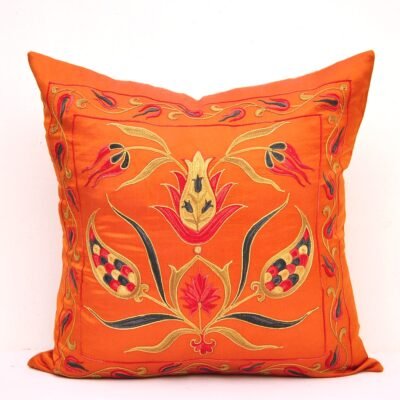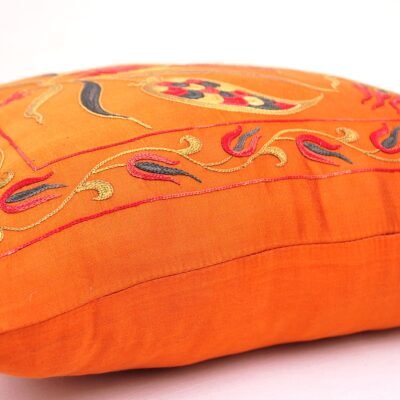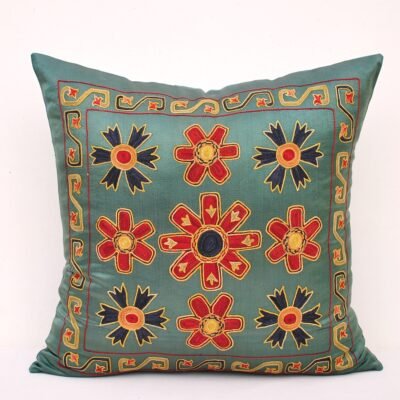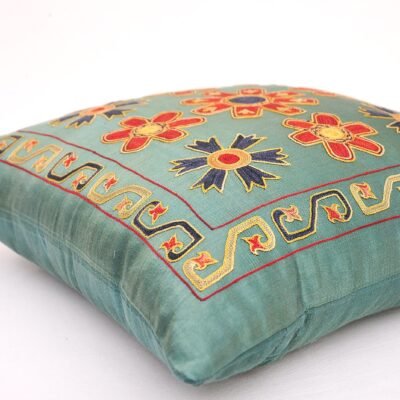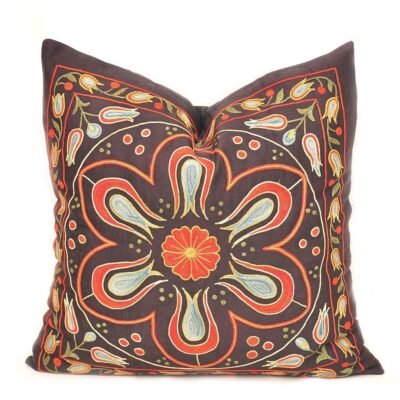


Teal Suzani Cushion Cover with Round Medallion
$98.00
Suzani cushion cover, hand-embroidered in silk on cotton, 50 × 50 cm · concealed back zip · plain ikat backing · cover only · teal with pale blue, coral and orange.
5 in stock
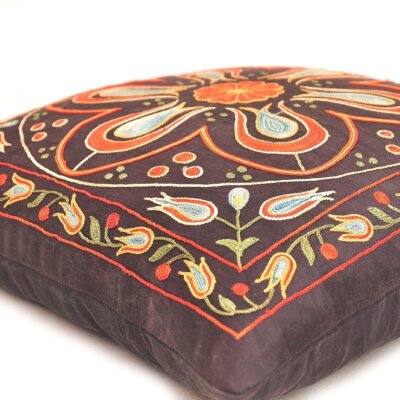
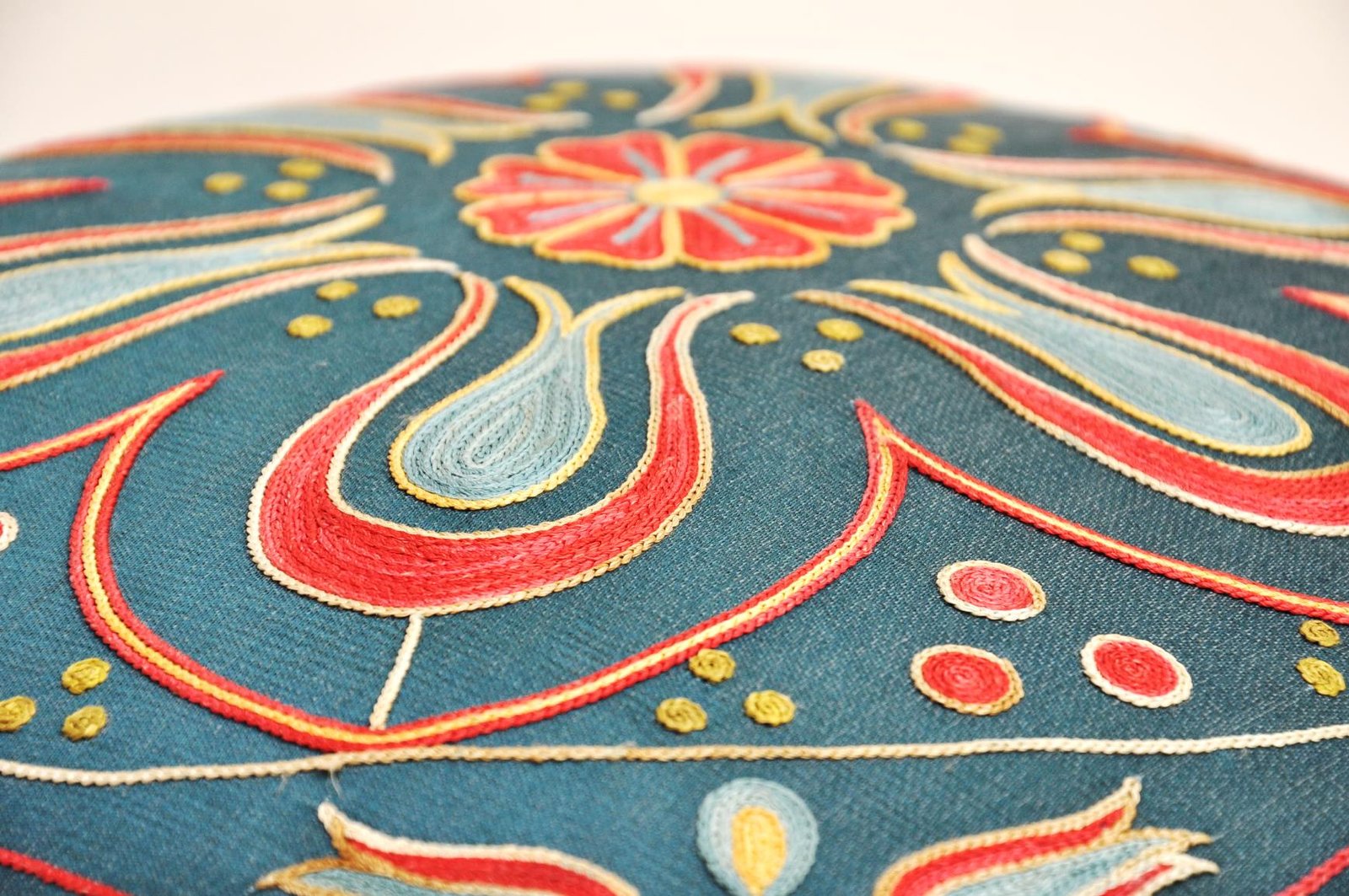
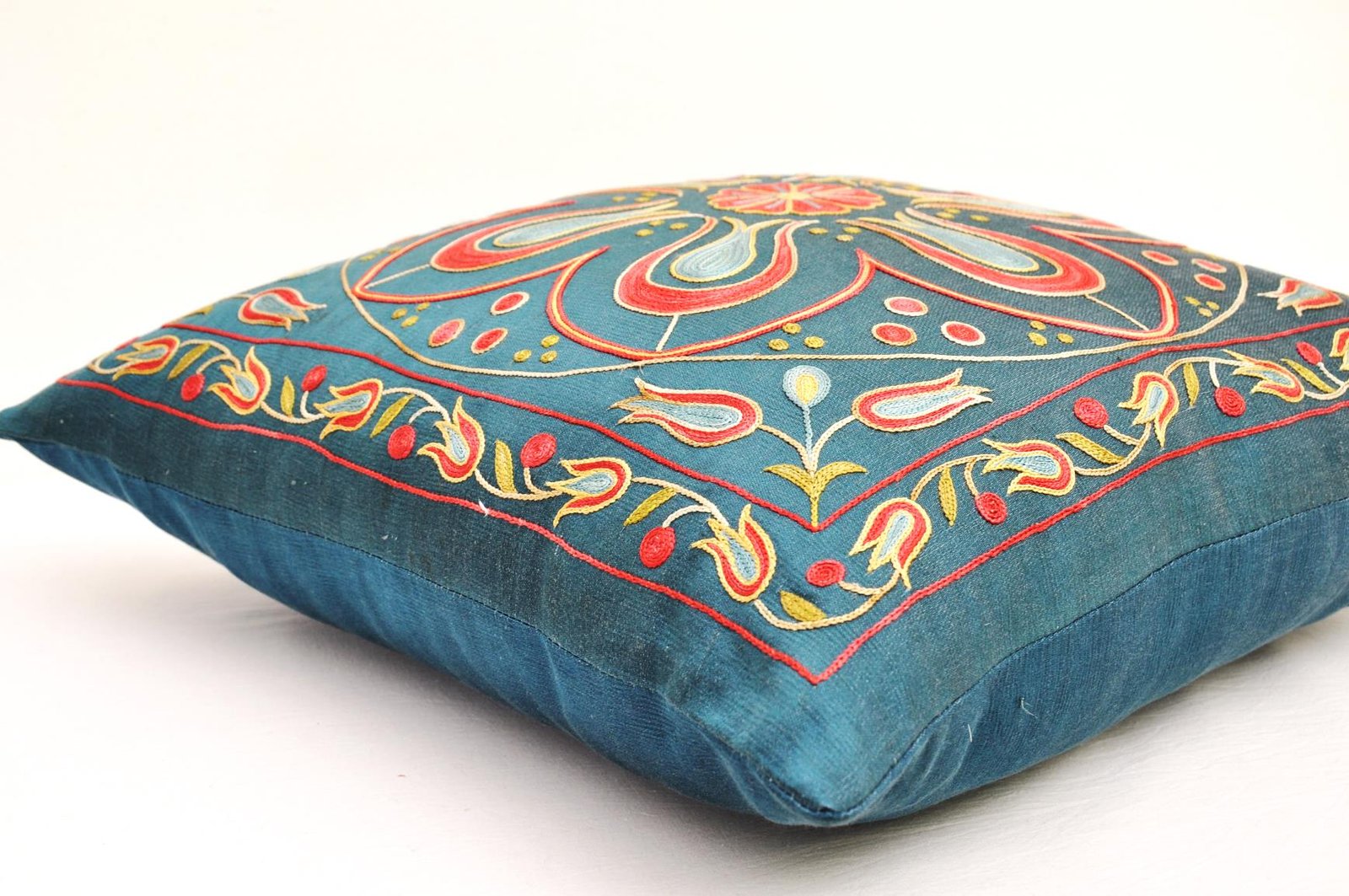
Pale blue teardrops outlined in coral turn around a small orange centre, held inside a ring that fills most of the teal ground. The teardrop — bodom, the almond — is the shape that travelled west and became the paisley.
Product details
- Product type: suzani cushion cover — cover only, insert not included
- Hand-embroidered in silk on a cotton ground: basma couching for the solid shapes, yurma chain stitch for the outlines and vines
- Size: 50 × 50 cm (20 × 20 in); fit a 55 cm insert for a full cushion
- Closure: concealed zip across the back
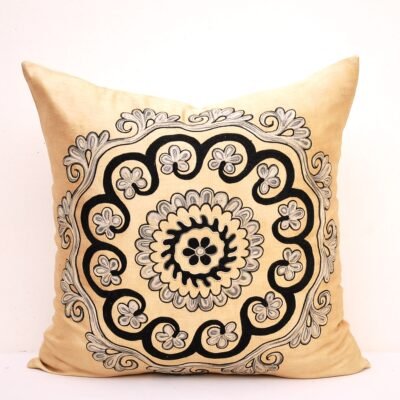
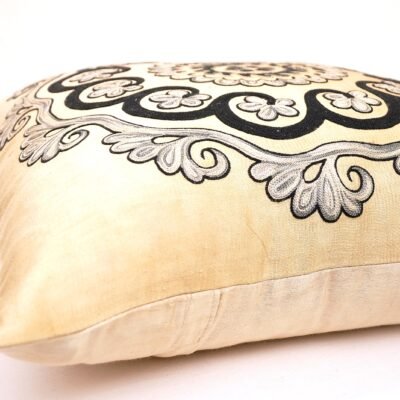
- Backing: plain handwoven ikat, usually beige, so the zip never crosses the embroidery
- Main colours: teal with pale blue, coral and orange
- Motif: a round medallion of teardrops around an orange centre
- One of a kind: cut from a single suzani, so no two covers are the same
- Care: Remove the insert. Dry-clean by preference, or hand wash alone in cool water without wringing. Press on the reverse over a towel and keep it out of direct sun
Where it goes
Cool and self-contained; it works on a grey or navy sofa where a warm suzani would look out of place. See the rest of the suzani cushion covers, the whole suzani panels they are cut from, or a plain ikat cushion cover to sit beside it.
How this suzani is made
A suzani is a dowry cloth: cotton strips laid out, the design drawn on in ink, then embroidered in silk by several women of one household and joined up at the end. The filling is basma, a laid-and-couched stitch that lets the silk sit flat and catch the light; the outlines and vines are yurma chain stitch. A cushion is cut from such a cloth so that one whole motif sits square in the panel, and sewn up in our workshop in Bukhara.
Dispatched from Bukhara within 24 hours by Uzbekiston Pochtasi tracked airmail: USA 9–18 working days, Europe and the UK 8–16, elsewhere 10–20.
| Weight | 0.1 kg |
|---|---|
| Dimensions | 50 × 50 cm |
Related products