
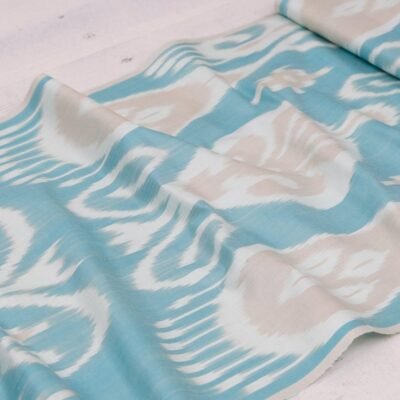
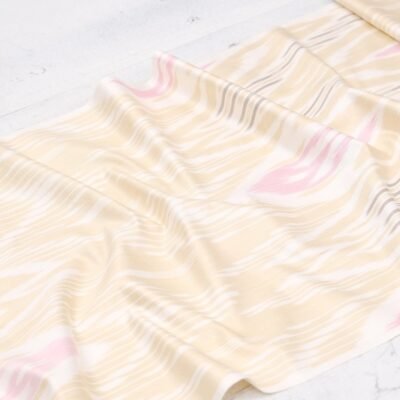
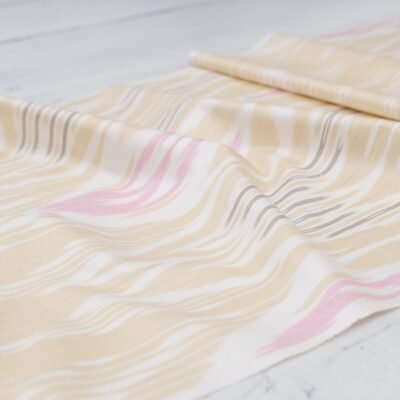



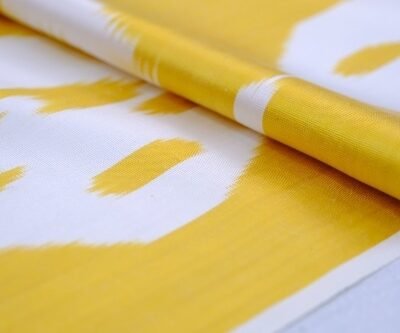
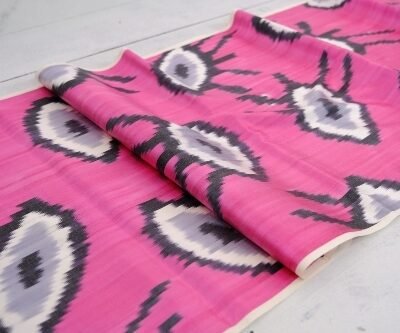
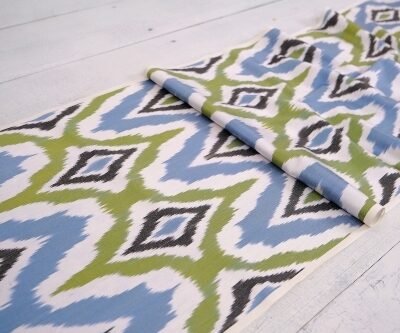


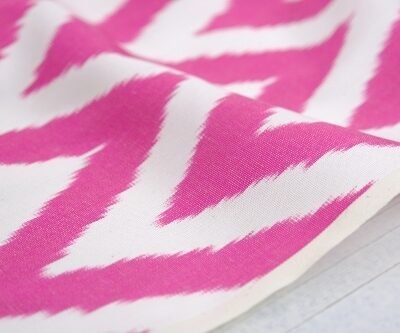
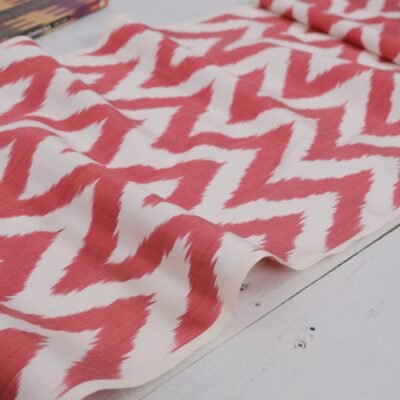
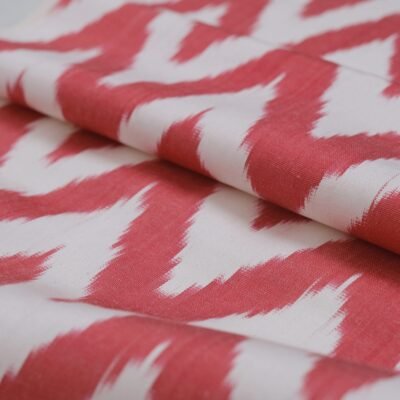

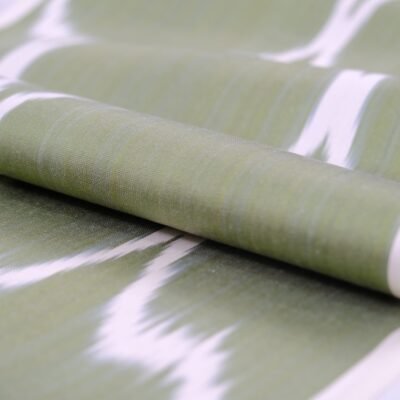
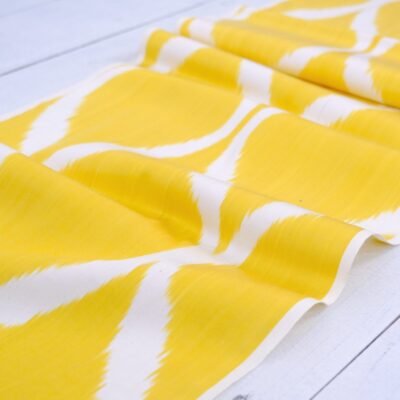
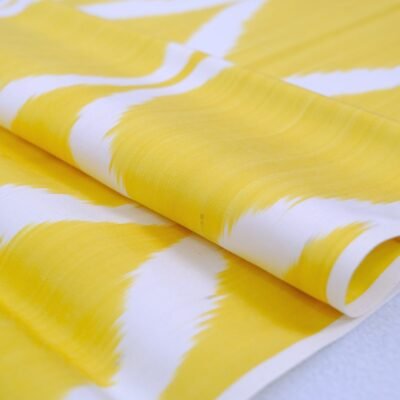
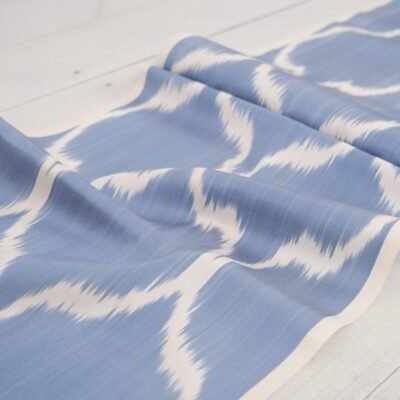
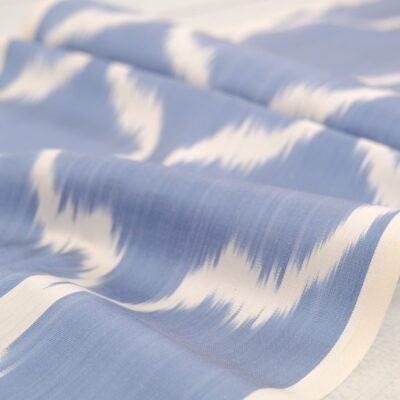
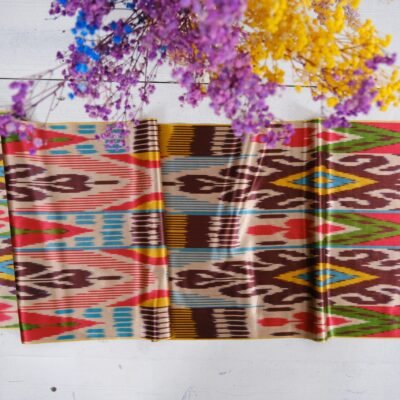
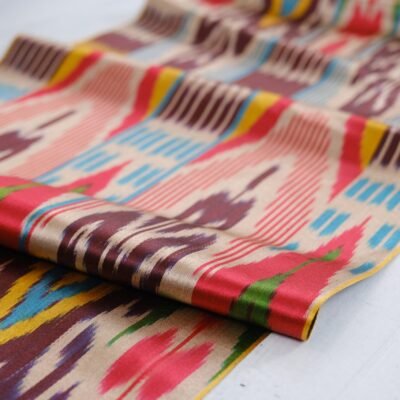
Adras, shoyi, atlas — which is which
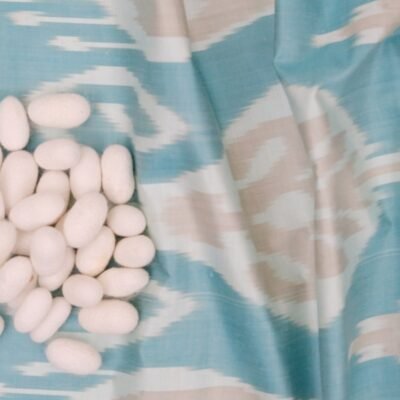
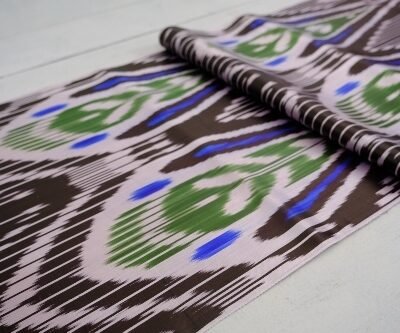
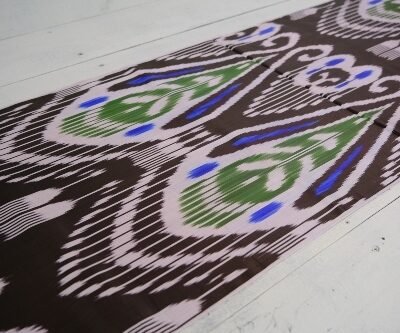
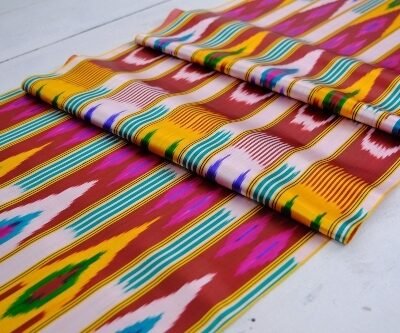
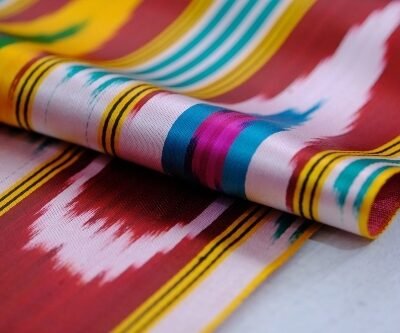
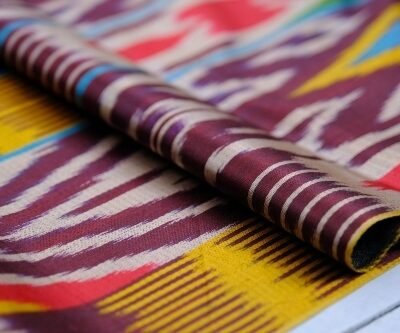
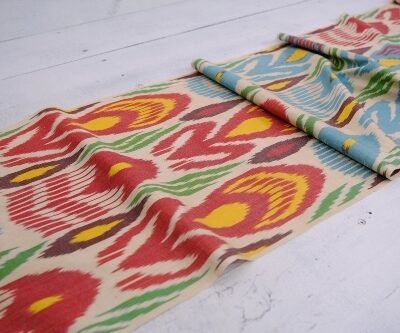
In the Fergana Valley the names follow the blend and the weave, not the pattern. Adras is a plain weave with roughly equal silk and cotton, matt-glossy, the everyday silk of Uzbek dress. Shoyi runs to 60 or 70 per cent silk, weighs less and catches more light. Atlas is pure silk in a satin weave, the pattern on the face only, and it is the cloth of khan-atlas wedding dresses; we stock it only occasionally. UNESCO, which inscribed atlas and adras weaving on its Representative List of Intangible Cultural Heritage in 2023, puts the distinction plainly: atlas is made from silk threads, adras is woven with silk and cotton threads. Everything on this page is adras or shoyi, and the percentage is printed on the listing because it changes how the cloth behaves: more silk means more sheen and drape, more cotton means more body and an easier wash.
What to make with it
Dresses, kaftans and robes first — a 40 cm cloth with a repeat every 225 cm is what Uzbek tailors have always cut, and it pieces well down a bodice or a sleeve. Scarves need only a metre and a half. Cushion fronts take half a metre each and the sheen reads beautifully against linen. For curtains, plan strips seamed at the repeat; for upholstery, choose our cotton or velvet ikat instead, because a silk-cotton blend will polish and wear on a seat. A knee-length dress usually needs 7–10 metres at this width; tell us the pattern and we will confirm before you order. If you are weighing silk against cotton for a project, cotton weaving versus silk ikat weaves goes into the difference. If you would rather buy it made up, our robes and kaftans and silk ikat dresses are cut from these same cloths.
How the silk gets its colour
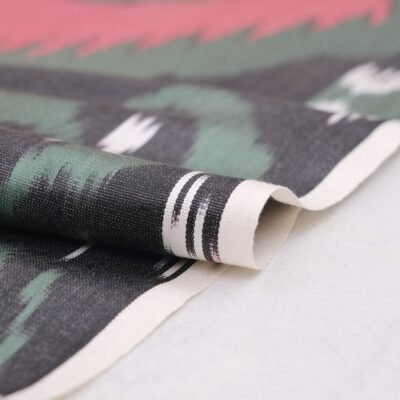
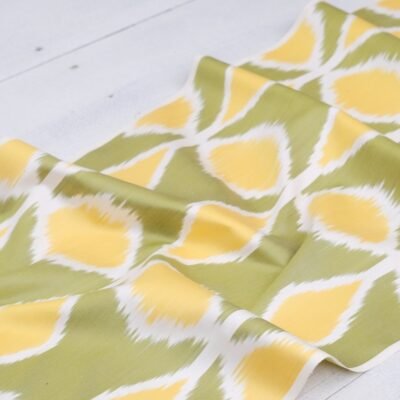
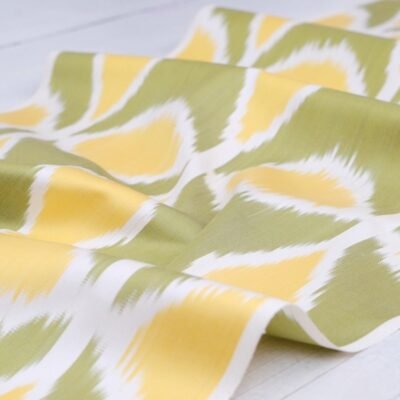
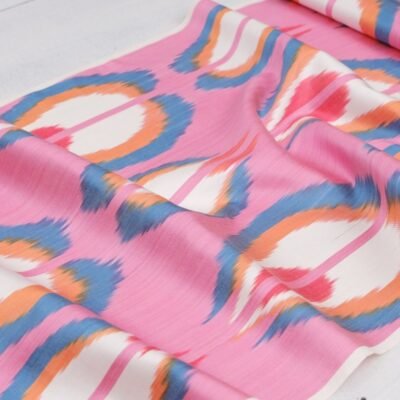
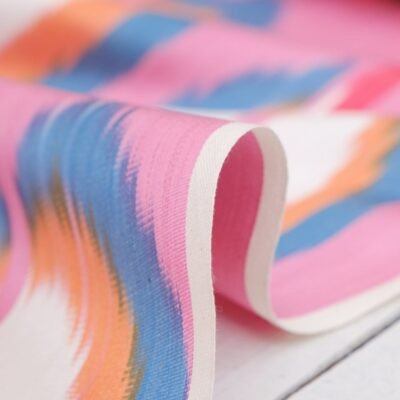
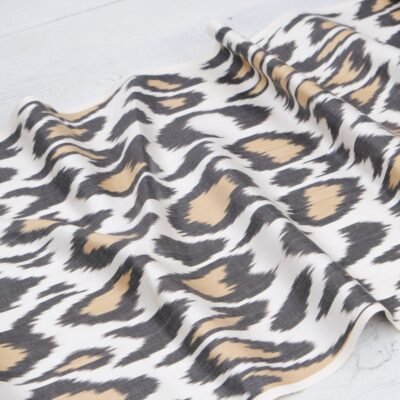
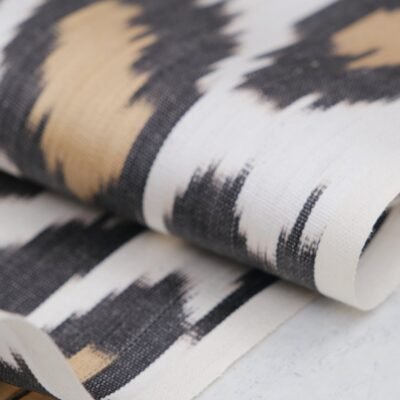
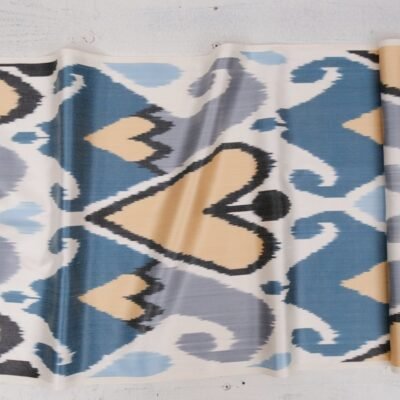
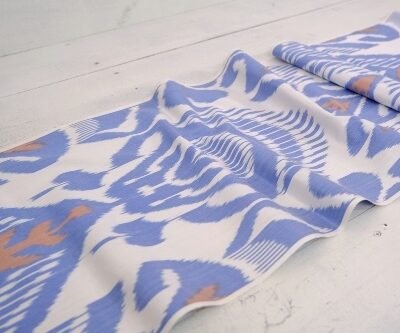
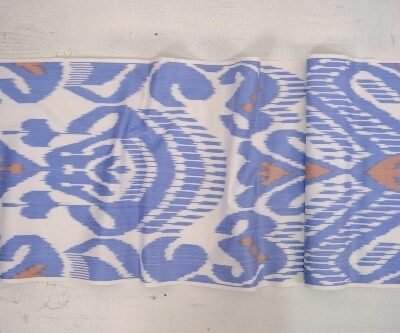
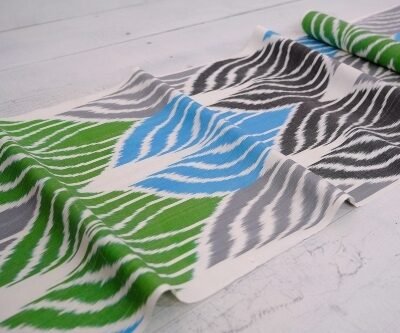
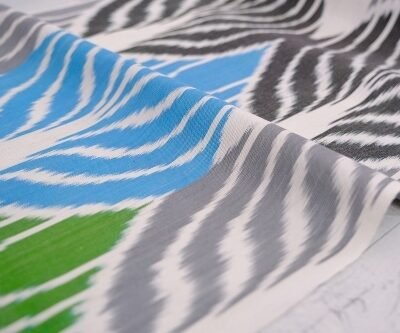
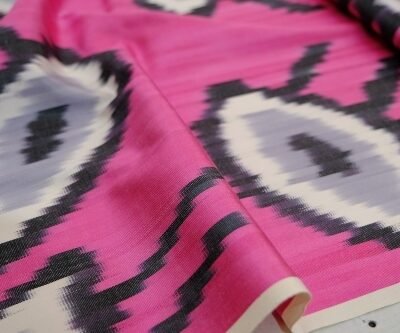
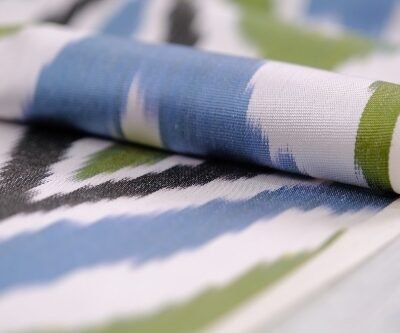
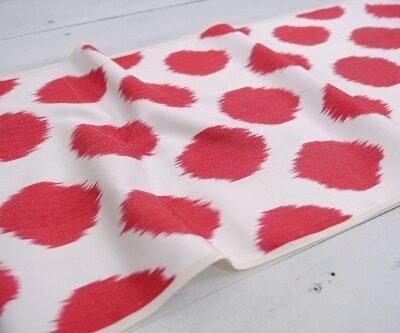
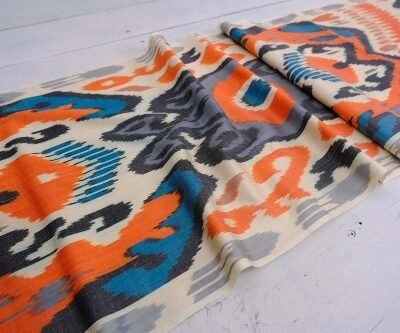
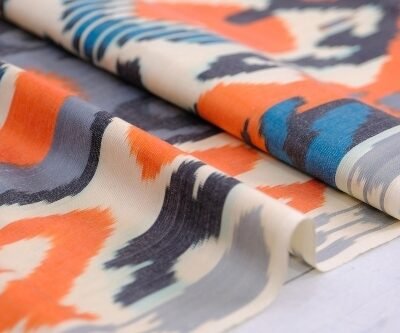
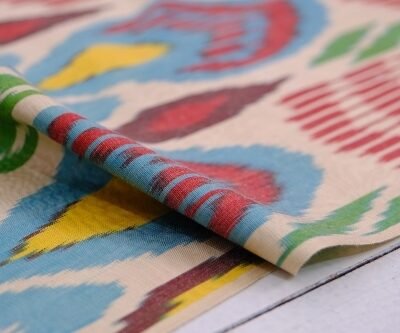
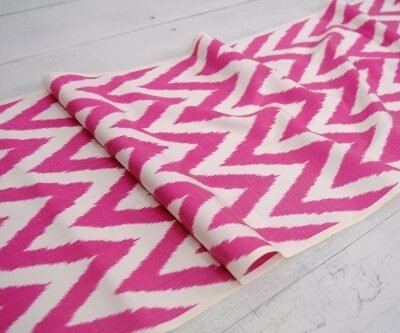
The threads are wound onto a frame, bound with cord and plastic wherever a colour must stay out, dipped, dried, unbound and bound again — one round per colour, and a rich cloth can take seven; Smithsonian conservators have counted up to eight sequential dye baths on nineteenth-century pieces. The whole sequence is in our guide to making ikat the traditional way. The feathered edge you see on every motif is the small slip between one binding and the next; it is the signature of the technique, not a flaw, and in Uzbek the cloth is named for it: abr, cloud. When the dyed warp reaches the loom, the weaver has to keep the pattern aligned by hand every few centimetres, which is why the repeat is stated in metres rather than millimetres.
Handwoven or printed
On a silk-cotton adras the pattern is as bright on the back as on the front, because it is in the threads; a printed "ikat" shows a ghost. The edges of the motif are clouded, not crisp. And the cloth is narrow: 40 to 42 centimetres is the width of a Margilan loom, and a 140 cm "ikat" has come off a mill, not a frame. More on the tell-tale signs in handwoven versus printed ikat.
Care
Hand wash at 30 °C with a mild detergent or shampoo, no soaking, no wringing; dry flat in the shade; iron on the reverse while slightly damp. Reds and indigos may release a little colour on the first wash, so wash alone. Dry-cleaning is fine and is the safer choice for a finished garment. Do not bleach. Step by step: how to wash ikat fabric.
Dyes
Some of these cloths are dyed with natural dyes and say so on the listing. Where the listing is silent, assume good synthetic dyes: colourfast, and the everyday choice of Margilan workshops today.
From the workshop
Abdulla has woven for us for more than twelve years. He draws the pattern on the stretched warp himself; the binding, dyeing and weaving are done by his family and neighbours in the same yard. We visit, we argue about colours, and the cloth on this page is the result. There is more about Abdulla and about us on the About page, and a short history of silk production in Margilan on the blog.
Stock and dyelots
About a fifth of this section is out of stock at any time, because a dyelot is a single warp of 20 to 30 metres and when it is sold it is gone. A re-dye of the same design is never identical — that is the point of the technique — so if you need matching metres for one project, buy them in one order.
Frequently asked questions
What is silk ikat fabric?
Silk ikat is a handwoven cloth whose pattern is tie-dyed into the silk warp threads before weaving, which gives every motif a soft, clouded edge. Uzbek silk ikat is woven in Margilan, in the Fergana Valley; Alesouk's is mostly from Abdulla's workshop there.
Is Alesouk's silk ikat pure silk?
No. Every fabric in this section is a silk-cotton blend with 50 to 70 per cent silk in the warp and cotton in the weft, and the percentage is on each listing. Pure-silk atlas comes off the loom only occasionally and is labelled when it does.
What is adras fabric?
Adras is the traditional Uzbek half-silk, half-cotton ikat in a plain weave: silk in the patterned warp, cotton in the weft, with a soft glow rather than a shine. It is the most common handwoven ikat and the one Uzbek tailors cut for dresses and kaftans.
What is the difference between atlas and adras?
Atlas is made from silk threads, adras from silk and cotton threads, in UNESCO's own wording. Atlas is a satin weave with the pattern on the face only and a proper sheen; adras is a plain weave with the pattern visible on both sides. Shoyi is adras's lighter cousin with 60–70 per cent silk.
How wide is silk ikat fabric?
Most Uzbek silk ikat is 40–42 cm (15–16 in) wide, the width of a Margilan hand loom; a few Alesouk cloths are 50 or 60 cm. The width is the first line on every product page.
Is silk ikat good for dresses, and how much do I need?
It is what the cloth was made for. On a 40 cm width a knee-length dress usually needs 7–10 metres, a scarf a metre and a half, a cushion front half a metre. Tell us the pattern and we will confirm the metres before you order.
Can silk ikat be washed?
Yes, by hand at 30 °C with a mild detergent or shampoo, no soaking or wringing, dried flat in the shade and ironed on the reverse while slightly damp; dry-cleaning is the safer choice for a finished garment. Never bleach, and wash reds and indigos alone the first time.
How is silk ikat sold?
By the metre: one unit in the cart is one metre (1.09 yards), cut to order from one metre upwards. Prices run from about $13 to $19 a metre, and each dyelot is a single warp of 20–30 metres, so buy matching metres in one order.
Do you ship silk ikat to the USA and UK?
Yes, worldwide by tracked airmail from Bukhara, Uzbekistan, leaving within 24 hours: USA 9–18 working days, Europe and the UK 8–16, elsewhere 10–20. Customs duties, where charged, are the buyer's.
Not sure which cloth your project wants? Silk, cotton or velvet ikat: which to buy for what compares all three on price, loom width and what each costs for a cushion, a dress or a pair of curtains.