

Out of stock


Out of stock

Out of stock
Sale!


Out of stock
Original price was: $82.00.$62.00Current price is: $62.00.



Out of stock

Out of stock

Out of stock

Out of stock

Out of stock
Which cloth for which cushion
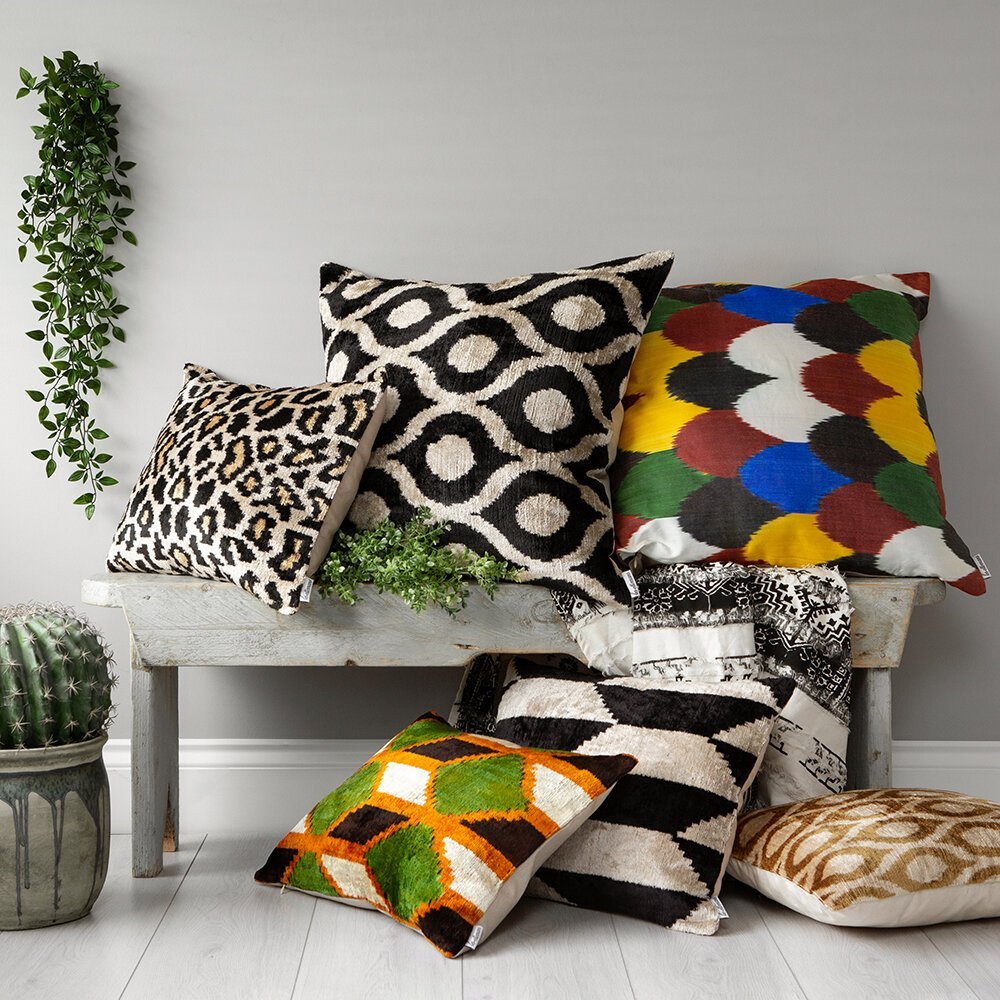
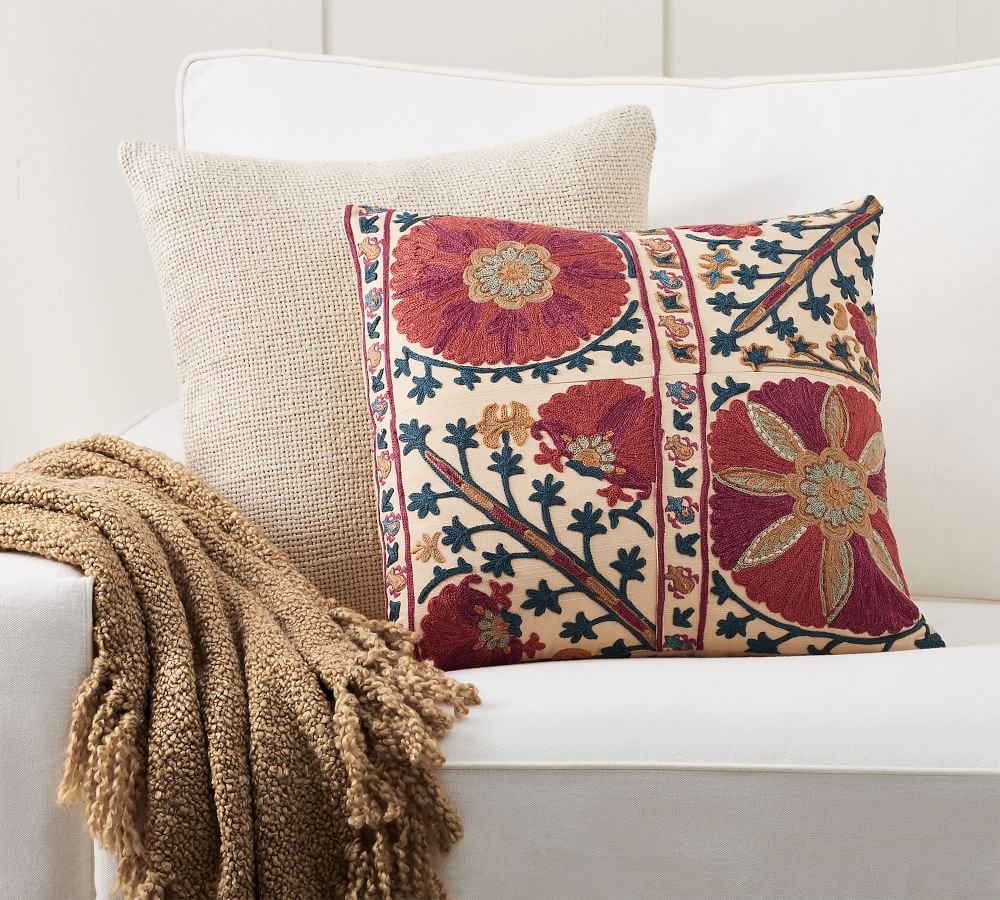
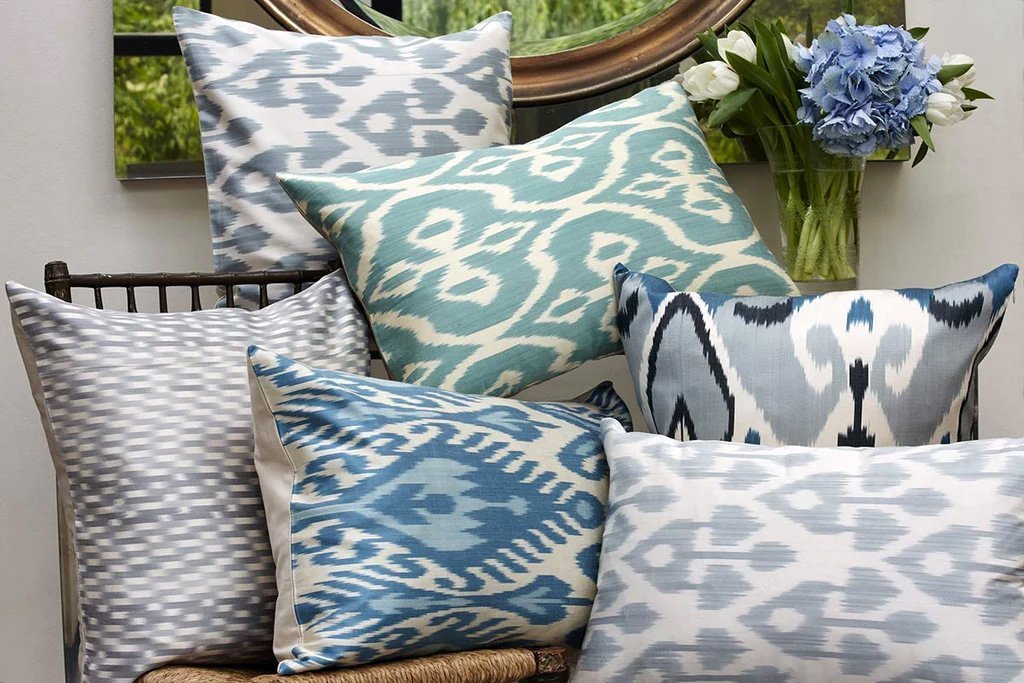
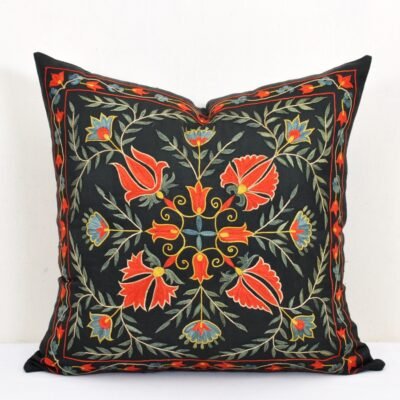
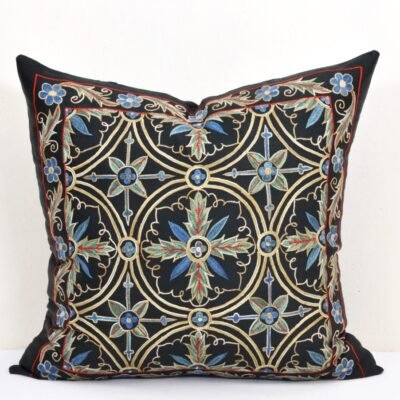
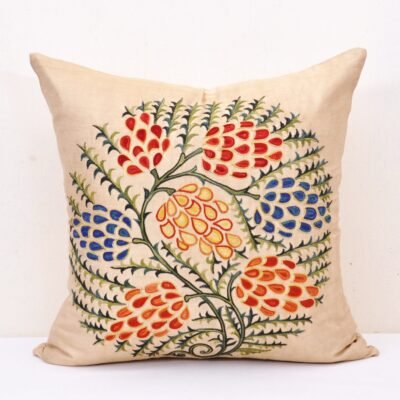
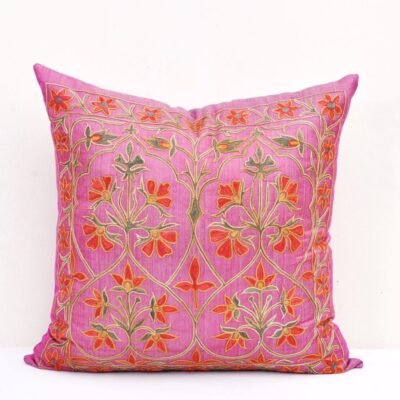
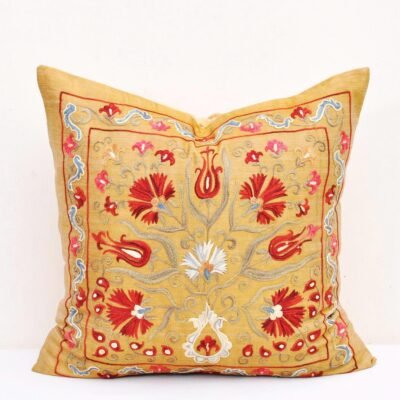
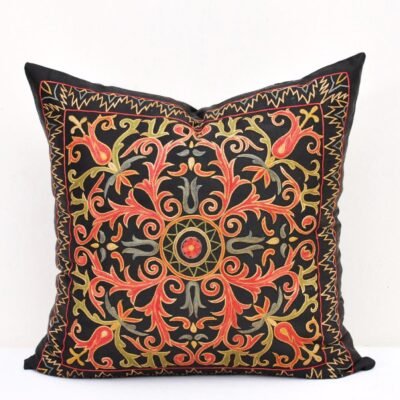
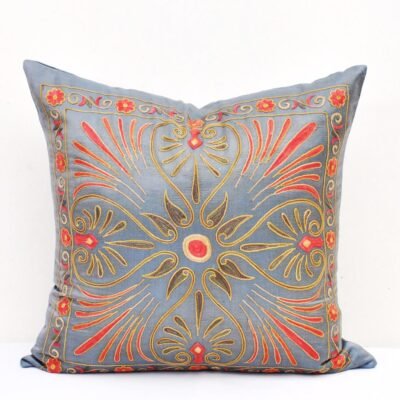
Cotton and silk-cotton ikat is the everyday cover: matt or softly glossy, washable at 30 °C, $11–29 for a 50 cm square, and the one to buy in threes. Silk velvet ikat is the cover that changes a sofa on its own — the pattern sits in the tips of the pile and shifts as the light moves — and most of ours are lumbar-shaped, at $30–65. Suzani covers are hand-embroidered silk on cotton, cut from panels worked in the Bukhara manner, $62–114, and no two are alike. The long shapes — lumbar at 36 × 58 cm and bolster at 40 × 100 cm — are for the back of a sofa, a bench or the head of a bed. Each section page goes into its own cloth; the Ikat Fabrics page explains the difference between cotton, adras and velvet if you want to start there.
Sizes and inserts
We sew to the two sizes an Uzbek house has always used and the two the export market asks for. The square is 50 × 50 cm (20 in) — 177 of the ikat covers and all the suzani covers — and it wants a 55 cm (22 in) insert, because a cover filled to its own size sags at the corners. The lumbar is 36 × 58 cm (14 × 23 in) and takes a 40 × 60 cm insert; the small velvet rectangle is 38 × 40 cm (15 × 16 in); the bolster is 40 × 100 cm and takes a 45 × 100 cm roll. Feather-and-down inserts fill the corners of a hand-woven cover better than polyester; a feather-wrapped foam roll is right for a bolster. We do not ship inserts — a feather insert weighs more than the cover and every country sells them — and the listing says "insert not included" so that nobody is surprised.
What is on the back, and how they close
Ikat covers, cotton and silk-cotton alike, are backed with the same ikat as the front, so the cover is reversible and both sides are handwoven cloth. Velvet covers are backed with a matching plain cotton, as their listings say. Suzani covers are backed with a plain ikat, nearly always beige, so the embroidered panel has a quiet reverse. Ikat, velvet, lumbar and bolster covers close with a concealed zip along one side seam; suzani covers close with a concealed zip across the back, so that the embroidered panel is never cut. Where a listing states a different closure, the listing is right.
Why the pattern never repeats exactly
An ikat cover is cut from handwoven cloth 40 or 50 cm wide — from the 50 cm cloth in one piece, or pieced from two 40 cm lengths with the pattern matched at the join — and each dyelot is one warp of 20–30 metres — when it is sold, that pattern is gone until it is re-dyed, and a re-dye is never identical. Buy a matching pair or trio in one order. The same is true of velvet, and truer of suzani, where one embroidered panel yields one cover.
Handmade, and how to check
Turn an ikat cover inside out: the pattern shows on the back of the cloth because it was dyed into the threads before weaving, and the motif edges are clouded, not crisp — a printed "ikat" cover has a plain back and hard edges. On a suzani cover the stitches travel across the reverse of the embroidered panel. On velvet, the back of the pile cloth is plain cotton with the coloured silk warp showing in lines. Nothing here is printed, and the handwoven versus printed ikat post shows the difference in photographs of the cloth.
Care
Cotton and silk-cotton ikat covers: hand wash at 30 °C with a mild detergent, or a gentle machine cycle inside a wash bag; dry in the shade; iron on the reverse. Velvet: the listing says hand wash at 30 °C or dry-clean — we would dry-clean, and never iron the face. Suzani: dry-clean, or a cold hand wash if the listing allows it; press on the reverse over a towel. Unzip and remove the insert before any washing. Reds and indigos can bleed the first time, so wash them alone. The general rules are in how to wash ikat fabric.
In a room
One velvet lumbar on a plain sofa; three ikat squares in one colour family in different patterns; a suzani square against linen. A cushion is the cheapest way to try Uzbek cloth in a room, and the ikat pillow covers post has more combinations. Hotels, restaurants and designers buy these by the dozen; tell us the sizes and the count and we will quote the run and match the dyelots.
Frequently asked questions
Do Alesouk cushion covers come with inserts?
No. Every cover is sold without an insert to keep the parcel light; a 50 × 50 cm cover takes a 55 cm insert, a 36 × 58 cm lumbar a 40 × 60 cm insert, and a 40 × 100 cm bolster a 45 × 100 cm roll. Feather-and-down inserts fill hand-woven covers best.
What sizes are Alesouk's cushion covers?
Squares 50 × 50 cm (20 in), lumbar 36 × 58 cm (14 × 23 in), small velvet rectangles 38 × 40 cm, bolsters 40 × 100 cm, and Moroccan poufs about 50 cm across and 35 cm high. The size is on every listing.
How do the covers close?
Ikat, velvet, lumbar and bolster covers have a concealed zip along one side seam; suzani covers have a concealed zip across the back so the embroidered panel is not cut.
What is the back of the cushion made of?
Ikat covers are backed with the same ikat as the front and are reversible. Velvet covers are backed with a matching plain cotton. Suzani covers are backed with a plain, mostly beige ikat.
How much do ikat cushion covers cost?
At Alesouk, cotton and silk-cotton ikat squares are $11–29, velvet ikat covers $30–65, suzani covers $62–114, lumbar covers $12.50–30, bolsters $28–45, and leather poufs $100–170.
Are the cushion covers handmade?
Yes. The ikat and velvet are handwoven in Margilan, the suzani is hand-embroidered, and the covers are cut and sewn in Alesouk's workshop in Bukhara, Uzbekistan. Nothing is printed.
Can I wash an ikat cushion cover?
Cotton and silk-cotton ikat covers, yes: hand wash at 30 °C or a gentle machine cycle in a wash bag, dried in the shade. Velvet and suzani covers should be dry-cleaned. Remove the insert first.
Can I buy matching cushions?
Yes, if you order them together. Each ikat dyelot is a single warp, so a pattern sold out is gone until it is re-dyed, and a re-dye never matches exactly.
Do you ship cushion covers to the USA and UK?
Yes, worldwide by tracked airmail from Bukhara, Uzbekistan, within 24 hours of the order: USA 9–18 working days, Europe and the UK 8–16, elsewhere 10–20. Duties, where charged, are the buyer's.