Easy Ways To Get In Touch
Reach out to our team using the contact form or direct via WhatsApp and we'll get back to you as soon as possible.
Whether you have a question about custom inquiries, wholesale support or would like to work together, we'll do our best to help you.
WhatsApp
Contact us via Email
We strive to answer all email requests within 24 hours, but we are usually much faster than that.
Join Our Newsletter
Subscribe to the Alesouk mailing list to receive updates on new arrivals, special offers and other discount information.
*By completing this form you're signing up to receive our emails and can unsubscribe at any time.
What velvet ikat is, and why it costs what it does
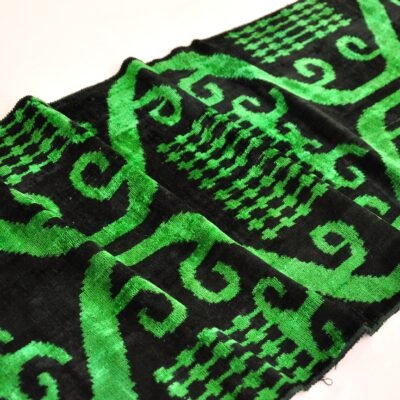
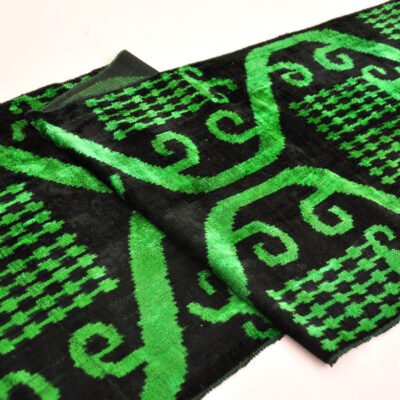
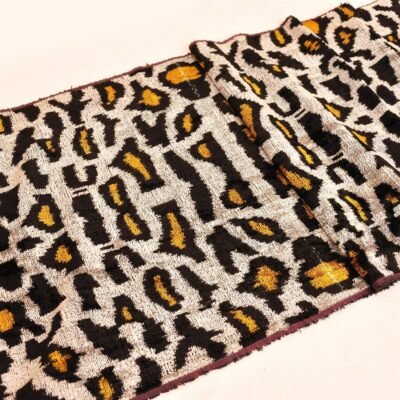
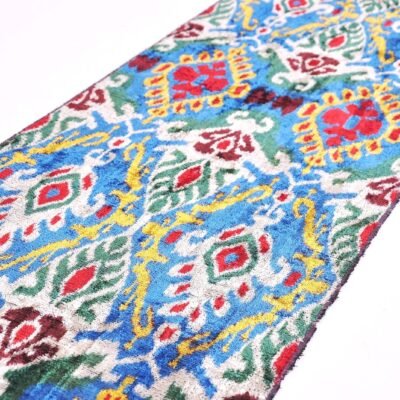
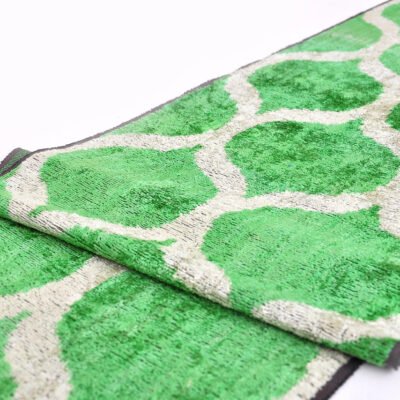
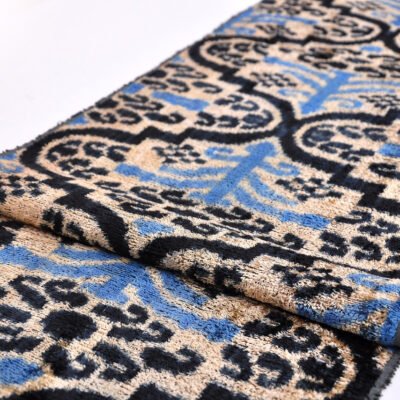
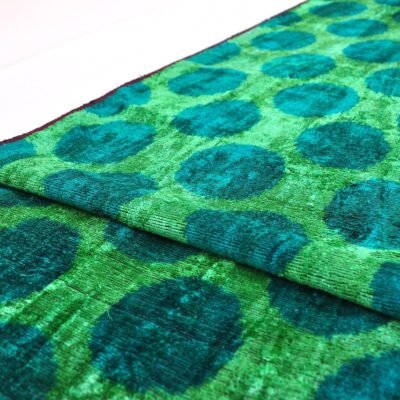
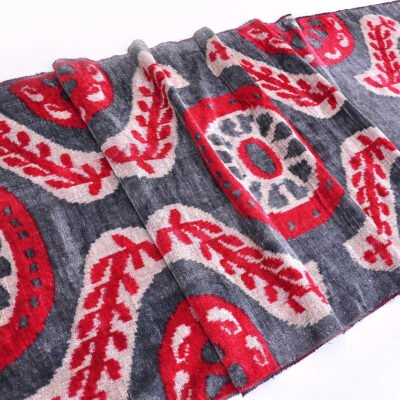
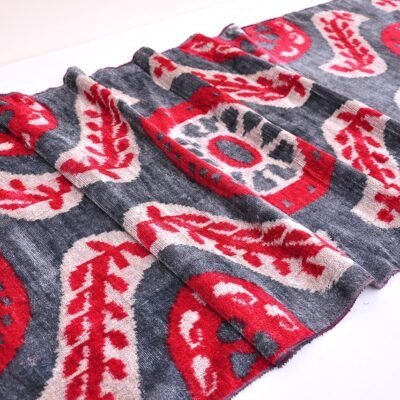
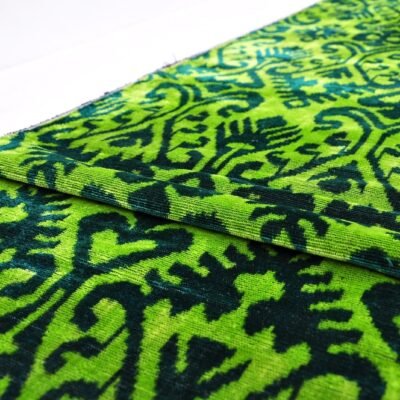
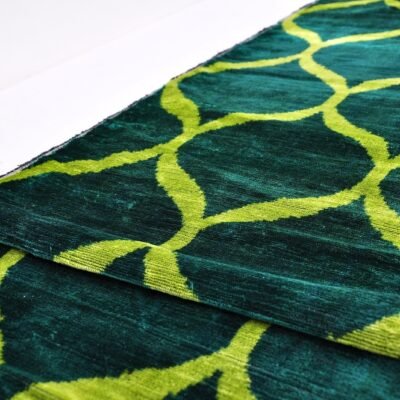
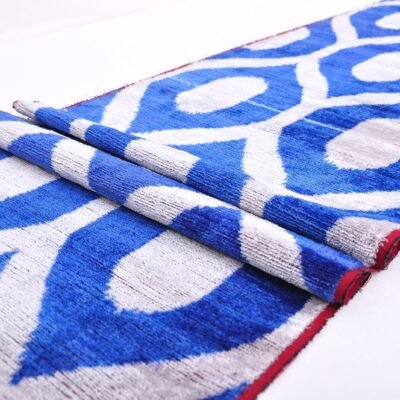
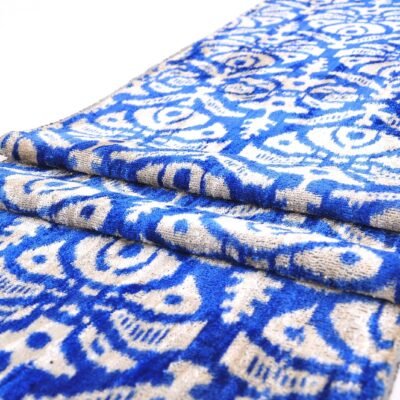
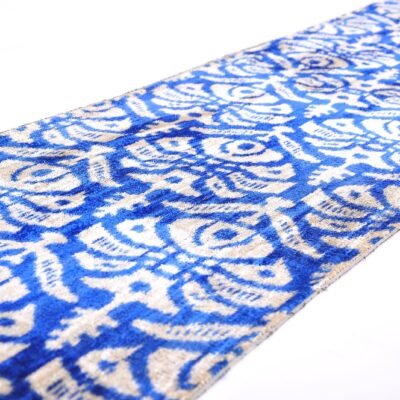
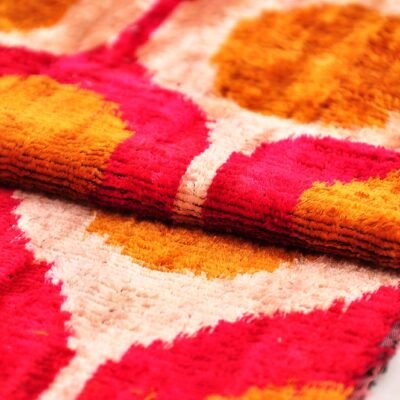
Every ikat is dyed before it is woven; velvet ikat is dyed before it is woven and then woven twice over, because a velvet needs a second, supplementary silk warp that is looped over wires and cut to make the pile. In the nineteenth century bakhmal was the cloth of court robes — HALI's editors describe it as a "seven-colour warp-ikat velvet" on cotton warps and illustrate a Bukhara munisak robe of the 1860s–70s — and it very nearly disappeared under Soviet factory production. Its revival is recent and traceable: the Margilan weaver Rasuljon Mirzaahmedov received a UNESCO Seal of Excellence in 2005 for bringing bakhmal back, and it was his cloth that Oscar de la Renta put on a New York runway the same year. The velvets on this page come from that revived Margilan tradition. At $39–48 a metre they are four to five times the price of our cotton and about twice our adras, which is roughly the ratio of the work.
What to make with it
Cushions first, as with all our ikat, but here the case is stronger: a 45 × 45 cm front takes half a metre, the pile catches lamplight, and one cushion is enough to change a sofa. Then jackets, evening coats and chapans — 40 cm panels piece well down a sleeve or a front — and bags, headboards, ottoman tops and the seats of occasional chairs. For a sofa that is sat on every evening, be honest with yourself: silk velvet crushes and polishes with daily wear, so use it on the back cushions and put cotton ikat on the seat. We make our own velvet ikat pillows from this cloth if you would rather buy it made up, and there is a room-by-room piece on silk velvet in the living room on the blog.
Widths, weight and how much to buy
Sixty-five of the sixty-six cloths here are 40 cm (15–16 in) wide, and the velvet is heavy for its width. A short jacket usually needs 4–5 metres at this width, a knee-length coat 7–9, a pair of 45 cm cushions one metre. Buy all the metres for one project in one order: a dyelot is a single warp, and a re-dye of the same design will not match. The pile has a direction, so mark the nap before you cut and keep every panel running the same way.
Handwoven velvet ikat, and how to tell
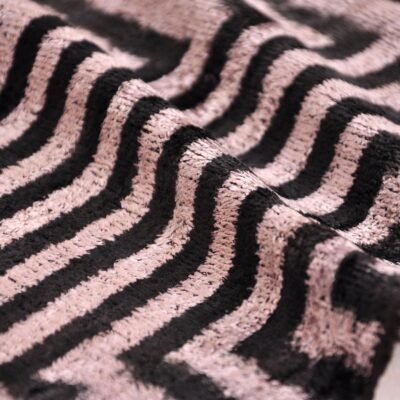
Turn it over. On a handwoven bakhmal the back is plain cotton ground with the coloured silk warp showing through in fine lengthwise lines, and the motif edges on the face are clouded, not crisp; a printed or embossed "velvet ikat" has a uniform back and sharp edges. Then look at the width: a 40 cm velvet came off a Margilan frame loom, a 140 cm one off a mill. The same tests for flat ikat are in handwoven versus printed ikat.
Care
Dry-clean. If you must spot-clean, use cold water on a cloth, blot, never rub, and let it dry flat. Steam to lift the pile; never iron the face, and if you iron the back do it over a towel with the pile down. Store rolled rather than folded, because a fold in silk velvet becomes a crease that steam will not fully lift. For the flat cloths, see how to wash ikat fabric; velvet is the exception to it.
Dyes
Some of these velvets are dyed with plant dyes and the listing says so; where it does not, assume modern, colourfast dyes, which are what Margilan workshops use for most work today. We label rather than generalise.
From the workshop
Velvet is where a Margilan workshop shows off. It is also the skill closest to being lost: by our count only two to four masters in Uzbekistan still weave silk velvet ikat on a handloom, and each year there are fewer. The binding is the same as for adras, but the weaver is working two warps at once and cutting pile with a blade as she goes, and a day's work is measured in centimetres. Several of the designs on this page are Abdulla's, drawn on the stretched warp in his yard (more about him and us); the rest come from two other Margilan families we have bought from for years. There is a short history of silk production in Margilan on the blog.
Trade
Interior designers and upholsterers take this cloth by the bolt for headboards, chairs and cushion runs. Tell us the design, the metres and the deadline; repeat dyelots take a few weeks.
Frequently asked questions
What is velvet ikat fabric?
Velvet ikat, called bakhmal in Uzbekistan, is a handwoven silk velvet whose pattern is tie-dyed into the silk pile warp before weaving, so the design sits in the tips of the pile and shifts with the light. Alesouk's velvet ikat is woven in Margilan, Uzbekistan, and sold by the metre.
Is velvet ikat pure silk?
The pile is silk on every velvet in this section. Most are woven with that silk pile over a cotton ground, which is how bakhmal has been made since the nineteenth century. Sixteen of them are all-silk — silk pile on a silk ground — which takes far more silk and more time at the loom, and those cost more. The composition line on each product page says which one you are looking at.
How wide is velvet ikat fabric?
40 cm (15–16 in) on 65 of Alesouk's 66 velvets, the width of a Margilan hand loom; one cloth is 60 cm. A cushion front, a chair seat or a jacket panel comes out of one width.
How much does velvet ikat cost?
At Alesouk, $39 to $48 a metre, cut to order from one metre. That is four to five times the price of cotton ikat and about twice the price of silk-cotton adras, which is roughly the ratio of the work involved. The all-silk velvets — silk pile on a silk ground rather than cotton — sit at the top of that range.
Is velvet ikat good for upholstery?
Yes for headboards, ottoman tops, occasional chairs and cushions, where the pile is seen more than sat on. On a sofa in daily use silk velvet crushes and polishes, so use it on the back cushions and cotton ikat on the seat.
Can I wash velvet ikat?
No; dry-clean it. Spot-clean with cold water on a cloth, blotting not rubbing, steam to lift the pile, and never iron the face. Store it rolled, not folded.
How much velvet ikat do I need for a jacket?
On a 40 cm width, a short jacket usually needs 4–5 metres and a knee-length coat 7–9. Buy all the metres in one order, because each dyelot is a single warp and a re-dye will not match.
Is Alesouk's velvet ikat handwoven?
Yes, every metre, on wooden frame looms in Margilan. The back shows the cotton ground with the coloured silk warp in fine lengthwise lines, which a printed or embossed velvet cannot copy.
How is velvet ikat sold and shipped?
By the metre, one unit being one metre (1.09 yards), by tracked airmail from Bukhara, Uzbekistan within 24 hours: USA 9–18 working days, Europe and the UK 8–16, elsewhere 10–20. Duties, where charged, are the buyer's.
Velvet is the most expensive ikat we weave and the narrowest. Silk, cotton or velvet ikat: which to buy for what gives the honest comparison — what each costs a metre, and what that means for a cushion, a dress or a pair of curtains.