
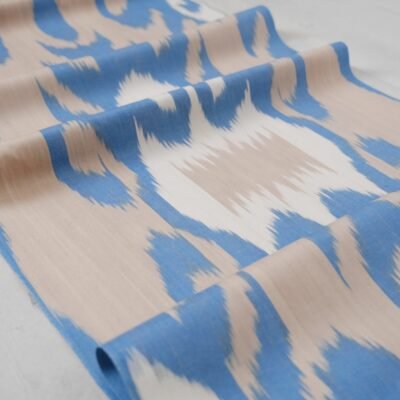
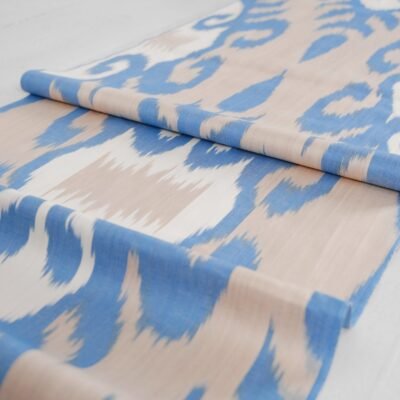
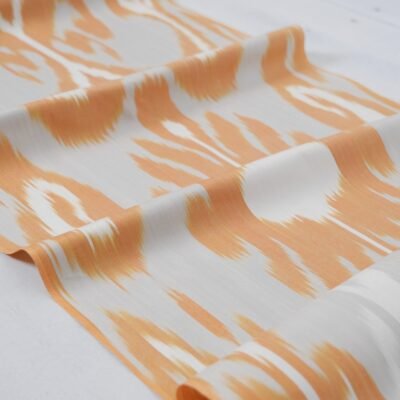
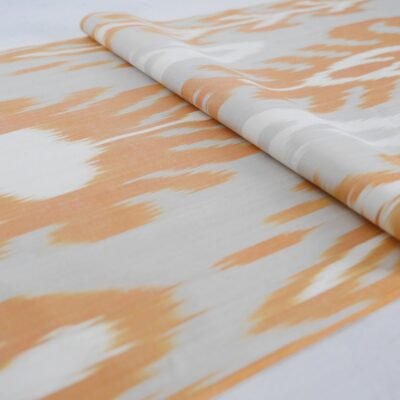


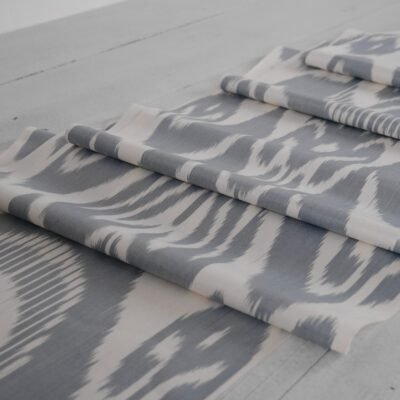
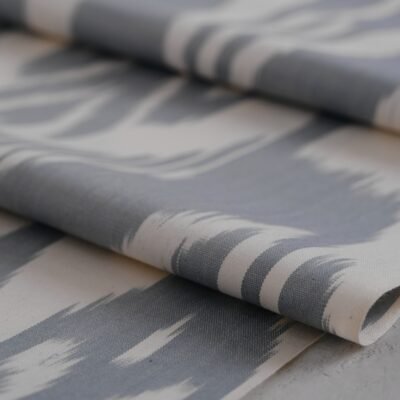
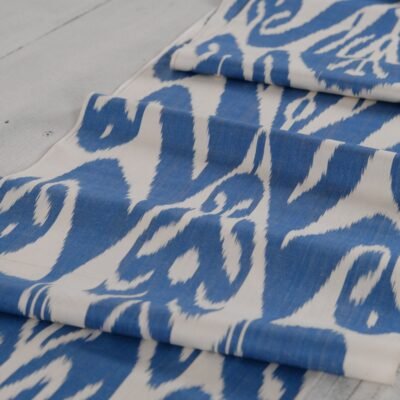
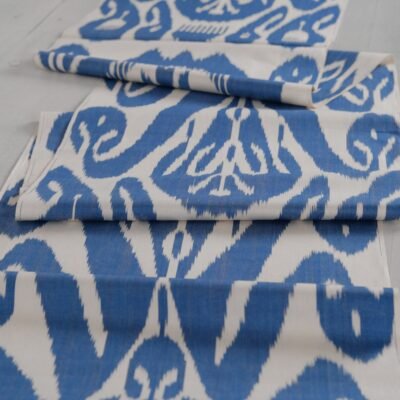


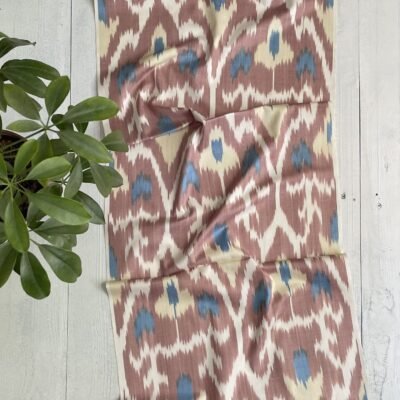

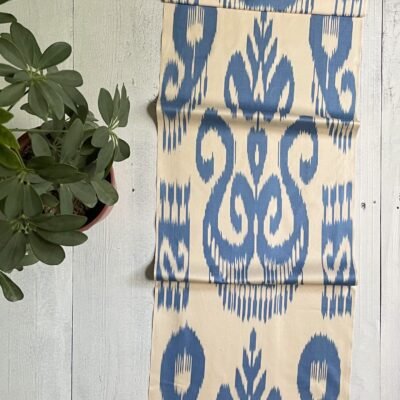

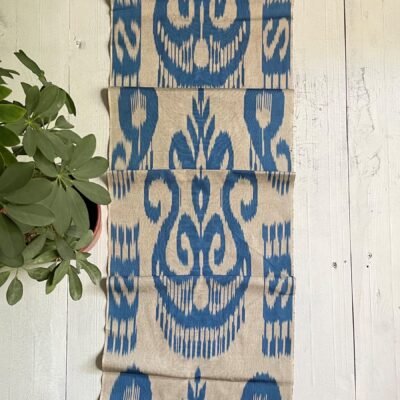

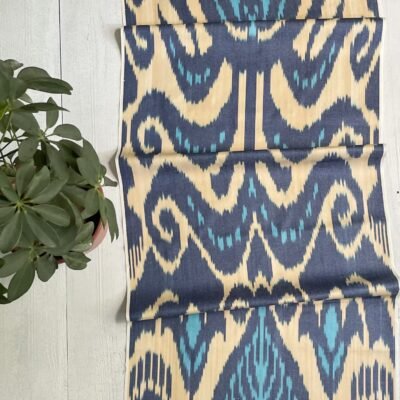


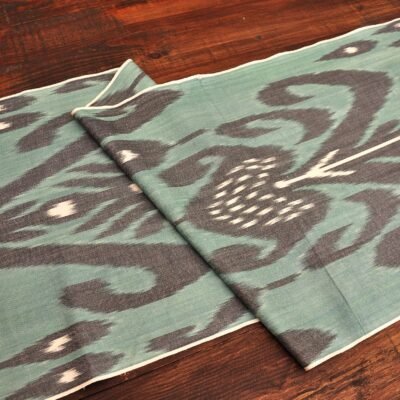

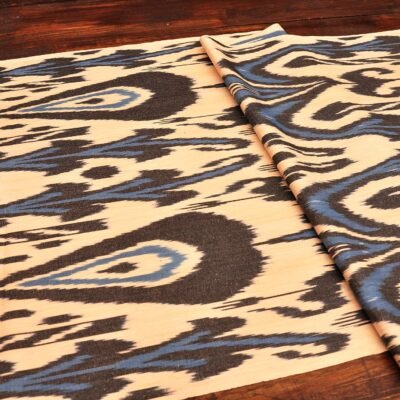

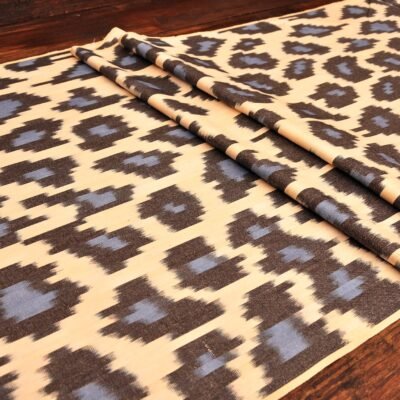

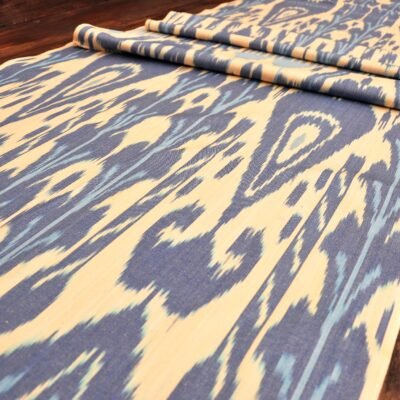

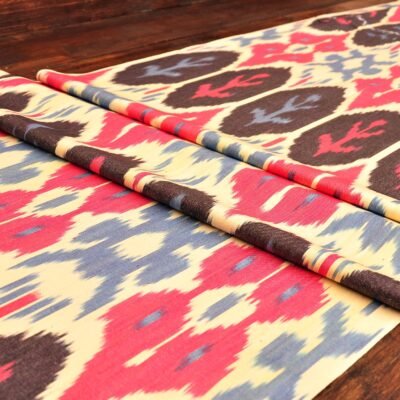


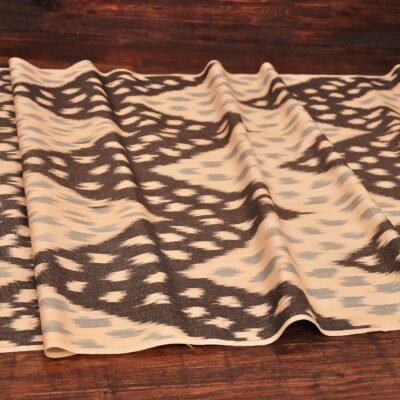
What cotton ikat is good for
Cushions before anything else: a 45 × 45 cm cover takes half a metre and the cloth holds a zip and a seam without fraying. Curtains and blinds, pieced from 40 cm strips and seamed at the repeat, or cut in one width from the 65 cm cloths. Light upholstery — dining chairs, an ottoman, a bench — where a heavy silk would polish; for a sofa that is sat on every evening, ask us for the densest weaves or line the cloth. Table runners, lampshades, tote bags, a summer dress or a child's jacket. It is the cloth to experiment with, because a mistake costs seven dollars. Two older posts go further: ikat for curtains and ikat fabric for furniture.
How it differs from our silk ikat
Cotton is the older cloth here. Resist-dyed cotton (asb) is recorded in Central Asia from the ninth and tenth centuries, long before the silk ikat of the Bukhara and Kokand khanates reached its nineteenth-century peak (Elmira Gyul, Academy of Sciences of Uzbekistan, 2020), and until the twentieth century almost every household in the Fergana oases had a loom for plain cotton — karbos — which is also the ground cloth of every suzani. Same looms, same dyers, same patterns, different fibre. Cotton has no sheen and more body; it drapes less and wears more. It takes dye slightly softer than silk, so the colours read a shade more muted, which many people prefer for a room. And it washes — the silk blends want hand-washing or the dry-cleaner, the cotton goes in a basin at 30 °C without drama. If you are choosing between the two for a chair, choose cotton; for a dress, choose the silk section. There is a longer comparison in cotton weaving versus silk ikat weaves.
Widths and repeats
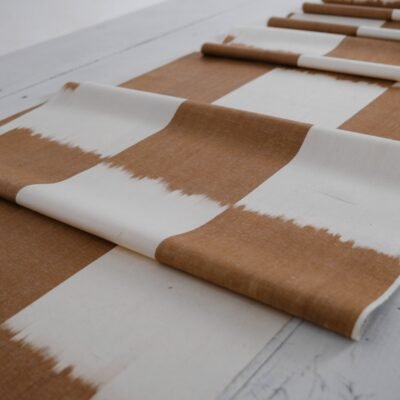
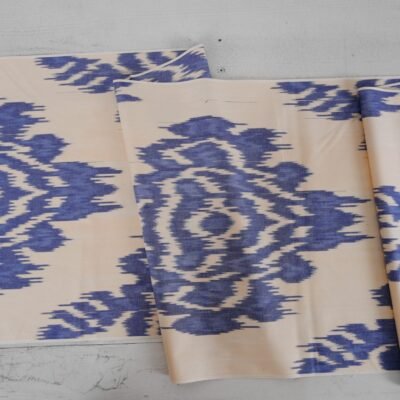
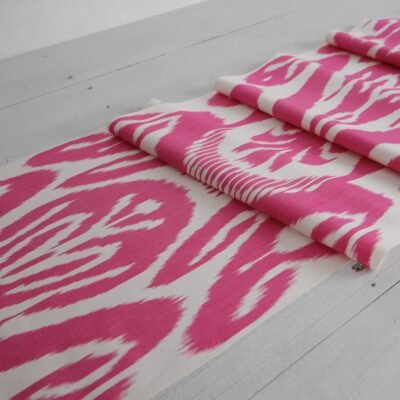
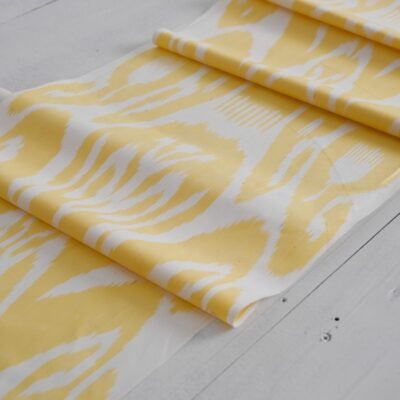
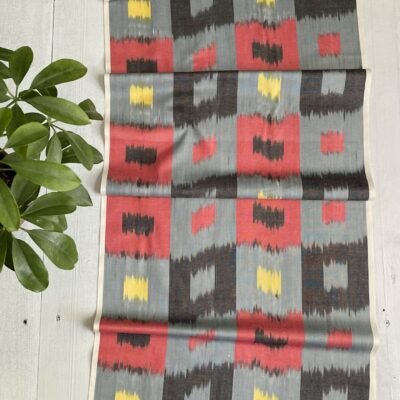
The traditional loom gives 40 cm (15–16 in), and that is what most of this page is. Because a 40 cm cloth is awkward for a curtain, Abdulla's workshop also weaves cotton at 50 and 65 cm on wider frames, and those cloths carry the width in the listing and have their own sections in the menu. Repeats run 60 cm on small geometric designs and around 225 cm on the large classical ones; where we have measured a repeat it is on the product page. For a project that needs matching, buy all the metres in one order — every dyelot is a single warp and a re-dye never matches exactly.
Handwoven, and how to check
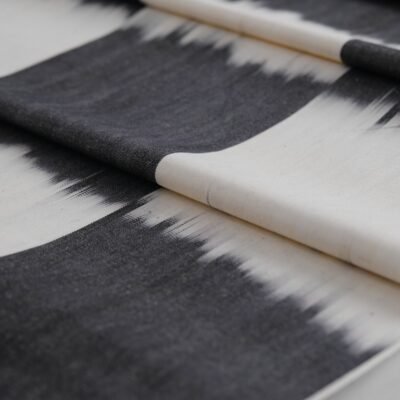
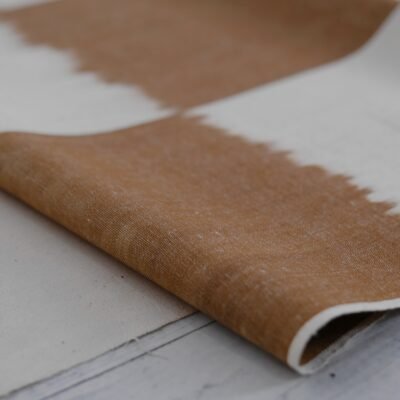
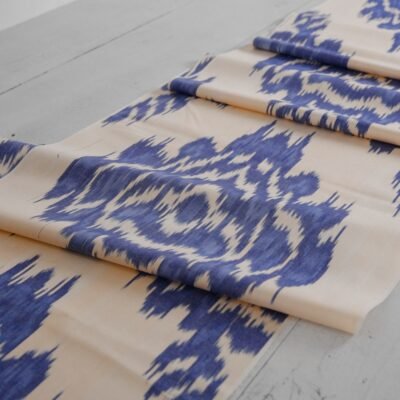
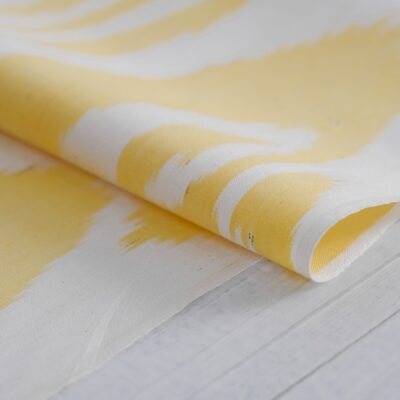
Turn the cloth over: the pattern is as sharp on the back, because it is in the thread, and the motif edges are clouded rather than crisp. Look for the fine lines across the width every so often — Margilan weavers call this alignment line at each repeat the iskat — and for the small irregularities that a mill cannot make. None of this cloth is power-loomed and none is printed. More in handwoven versus printed ikat.
Care
Hand wash or gentle machine wash at 30 °C with a mild detergent, no bleach; dry in the shade, iron on the reverse while damp. Expect a little shrinkage on the first wash — pre-wash the cloth before you cut it — and wash reds and dark blues alone the first time. Vacuum upholstered pieces rather than scrubbing them; treat spills by blotting, not rubbing. Step by step: how to wash ikat fabric.
Dyes
Most of this cotton is dyed with modern, colourfast dyes in Abdulla's yard; a few pieces are dyed with plant dyes and say so on the listing. We label rather than generalise: an EU-funded programme (RUTSIS, running since 2022) is working with Fergana Valley workshops on cleaner dyeing precisely because "all natural" is not the everyday reality of the trade, and we would rather you knew that.
From the workshop
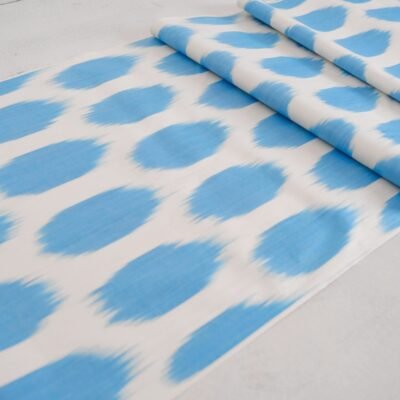
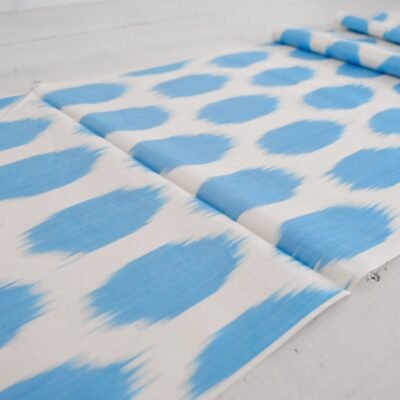
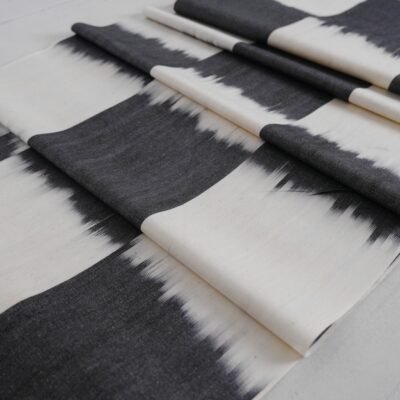
Cotton ikat is where Margilan apprentices learn: the warps are cheaper, the mistakes are forgivable, and the same hands that bind a silk warp on Monday bind a cotton one on Tuesday. Abdulla's family has woven for us for more than twelve years (more about him and us), and the small designs on this page — polka dots, chevrons, the "chess" and "heartbeat" patterns — are the ones his younger weavers cut their teeth on.
Trade
Interior designers and upholsterers buy this cloth by the bolt. Tell us the design, the metres and the deadline; pattern-matched cutting and repeat dyelots are possible with notice.
Frequently asked questions
What is cotton ikat fabric?
Cotton ikat is a handwoven cotton cloth whose pattern is tie-dyed into the warp threads before weaving, so the design sits inside the cloth rather than printed on it. Alesouk's cotton ikat is woven on hand looms in Margilan, in Uzbekistan's Fergana Valley, and sold by the metre.
Is Alesouk's cotton ikat 100% cotton?
Yes. Every fabric in this section is 100% cotton and each listing states the composition. Silk-cotton blends (adras and shoyi) are listed separately under Silk Ikats.
How wide is Uzbek cotton ikat fabric?
Most Uzbek cotton ikat is 40 cm (15–16 in) wide, the width of a traditional Margilan hand loom. Alesouk also weaves cotton ikat at 50 cm and 65 cm; the width is the first line on every product page and the wider cloths have their own sections.
Is cotton ikat good for upholstery?
Yes for dining chairs, benches, ottomans, headboards and cushions. For a sofa that is used every day, choose the densest weaves or add a lining; for heavy traffic, velvet ikat wears better than cotton.
Can you machine wash cotton ikat?
Yes, on a gentle cycle at 30 °C with mild detergent and no bleach; dry in the shade and iron on the reverse. Pre-wash before cutting, because the first wash shrinks the cloth slightly, and wash reds and dark blues alone the first time.
What is the difference between cotton ikat and silk ikat?
Same looms, dyers and patterns; different fibre. Cotton ikat is matt, firmer and washable, and costs about $7–15 a metre at Alesouk; silk-cotton ikat (adras, shoyi) has sheen and drape, needs hand-washing or dry-cleaning, and costs about $13–19 a metre. Choose cotton for cushions and chairs, silk for dresses and kaftans.
How much cotton ikat do I need for a cushion?
Half a metre of 40 cm-wide cotton ikat covers the front of a 45 × 45 cm (18 in) cushion. A pair of curtains is pieced from 40 cm strips seamed at the pattern repeat, or cut in one width from the 65 cm cloth.
Is Uzbek cotton ikat handwoven or printed?
Handwoven, every metre. Alesouk's cotton ikat is woven on wooden frame looms in Margilan with no power looms and no printing; the pattern is as clear on the back of the cloth as on the front, which a print cannot copy.
How is cotton ikat fabric sold, by the yard or by the metre?
By the metre. One unit in the cart is one metre (1.09 yards), cut to order from one metre upwards. Buyers who think in yards should round up.
Where does Alesouk ship cotton ikat, and how long does it take?
Worldwide by tracked airmail from Bukhara, Uzbekistan, leaving within 24 hours: USA 9–18 working days, Europe and the UK 8–16, Australia and elsewhere 10–20. Customs duties, where charged, are the buyer's.